
A rush of tantalizing aromas filled my kitchen as I tossed together the vibrant ingredients for a hearty dish. This Korean Home-Style Stewed Kimchi Tuna, or Kimchi Tuna Bokkeum, is a delightful 10-minute recipe that turns pantry staples into a flavor-packed meal. With spicy kimchi and tender tuna, it’s not just quick to make; it’s also a comforting and satisfying option that will please both your taste buds and your schedule. Whether you’re looking for a speedy lunch or an effortless dinner, this dish brings a taste of Korean cuisine into your home with ease. Ready to discover how to transform your canned tuna into a mouthwatering masterpiece? Let’s dive in!

Why is this dish a must-try?
Quick, delicious meal: In just 10 minutes, you can whip up a satisfying dish that your family and friends will love.
Comforting flavors: The combination of spicy kimchi and tender tuna creates a rich, savory experience that’s perfect for any occasion.
Pantry cooking: With simple ingredients like canned tuna and kimchi, this recipe is a go-to for those busy nights when you want to avoid fast food.
Versatile options: Feel free to customize by swapping tuna for tofu or salmon for different twists on this classic.
Crowd-pleaser: Whether you’re serving it over rice or enjoying it solo, this stewed kimchi tuna will captivate every palate. Dive into the world of Korean flavors and make this dish your new favorite!
Stewed Kimchi Tuna Ingredients
For the Stir-Fry
• Onion – Adds sweetness and depth to the dish; opt for yellow or white onions for the best flavor.
• Kimchi – The heart of this dish that brings a spicy and tangy profile; choose your favorite store-bought or homemade kimchi.
• Canned Tuna – A protein powerhouse; use tuna in water or olive oil for varying taste profiles.
• Neutral Oil – Essential for sautéing; canola or vegetable oil works perfectly.
For the Flavor Boost
• Gochugaru – Korean red pepper flakes that impart heat and vibrant color; adjust according to your spice preference.
• Dashi Powder – Elevates the umami experience; substitute with fish sauce or miso if unavailable.
• Sesame Oil – Infuses a delightful fragrance and richness; this ingredient is a must-have!
• Sugar – Balances the spiciness and tang of kimchi; can substitute with honey or agave for a sweeter touch.
For Garnishing
• Sesame Seeds – Add a nutty crunch and texture; toasted seeds enhance the dish’s flavor.
• Green Onion – Brings a fresh, vibrant touch; chop it finely for a beautiful garnish.
Transform your pantry staples into this delightful Stewed Kimchi Tuna ready in just 10 minutes!
Step‑by‑Step Instructions for Stewed Kimchi Tuna
Step 1: Heat the Pan
Begin by heating a medium-sized skillet over medium heat for about 2 minutes. Once hot, add 1 tablespoon of neutral oil, swishing it around to coat the pan evenly. The oil should shimmer but not smoke, indicating it’s ready for the next ingredients.
Step 2: Sauté Onions and Kimchi
Add 1 finely chopped onion to the pan, stirring frequently for about 3 minutes until the onions are soft and translucent. Next, toss in your favorite kimchi (about 1 cup), sautéing everything together until the kimchi’s vibrant colors brighten and aromatic flavors fill the air, roughly 2 more minutes.
Step 3: Combine Tuna
Gently introduce 1 can of tuna with its juices into the skillet, using a fork to break it up slightly. Stir the mixture to combine all the ingredients, letting the tuna mingle with the onions and kimchi for about 2 minutes. The tuna should be heated through, enhancing the overall flavor of your stewed kimchi tuna.
Step 4: Season the Mixture
Sprinkle in 1 tablespoon of gochugaru and 1 teaspoon of dashi powder, and drizzle with 1 tablespoon of sesame oil, stirring well to ensure all components are well-mixed. Allow the stewed kimchi tuna to cook for another minute, letting the spices infuse beautifully with the tuna and kimchi.
Step 5: Simmer and Balance Flavors
Add a pinch of sugar to the pan, mixing everything together, and gently simmer for 3 to 5 minutes, stirring occasionally. Watch for the mixture to bubble lightly, allowing the flavors to meld and the sauce to thicken slightly, creating a deliciously cohesive dish perfect for serving.
Step 6: Garnish and Serve
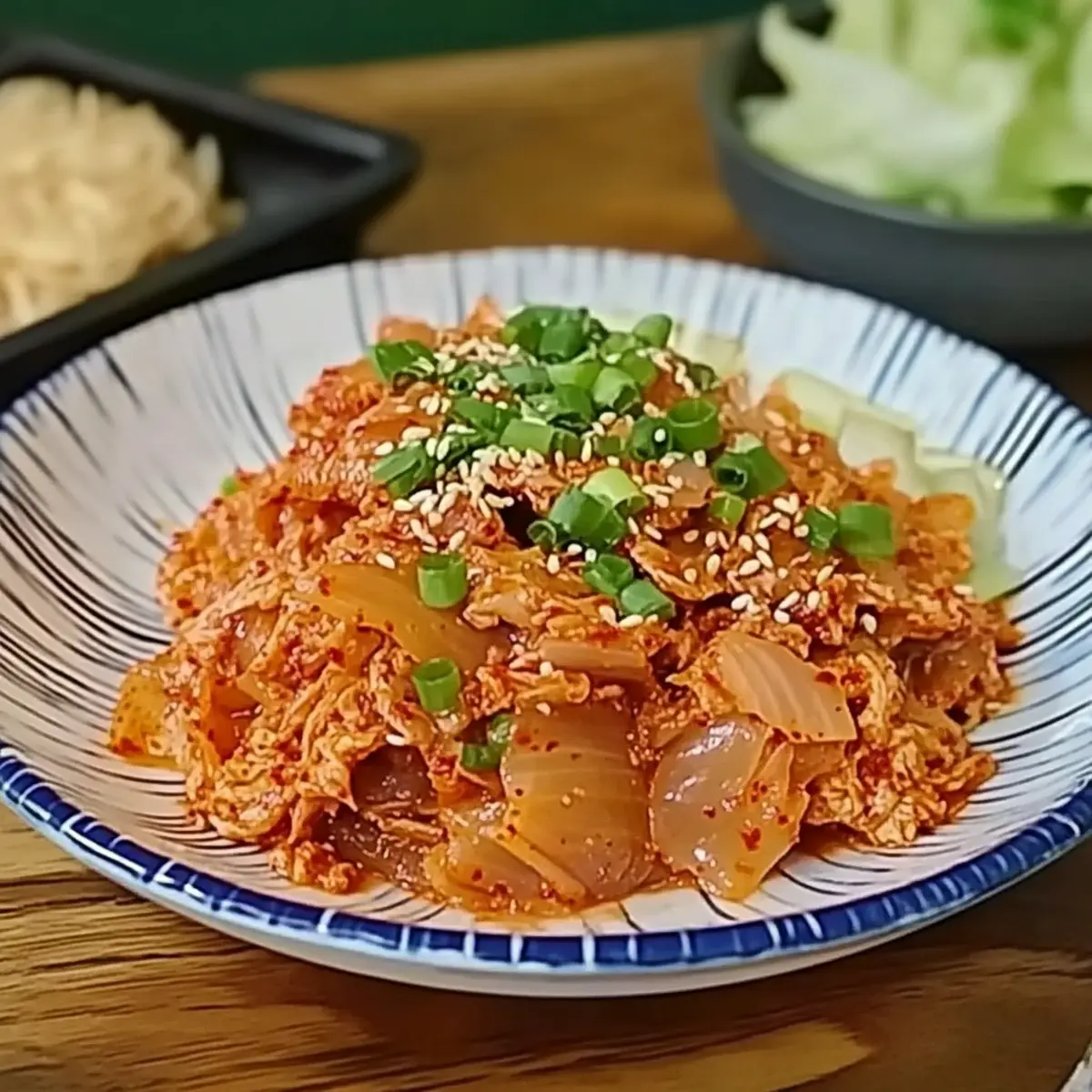
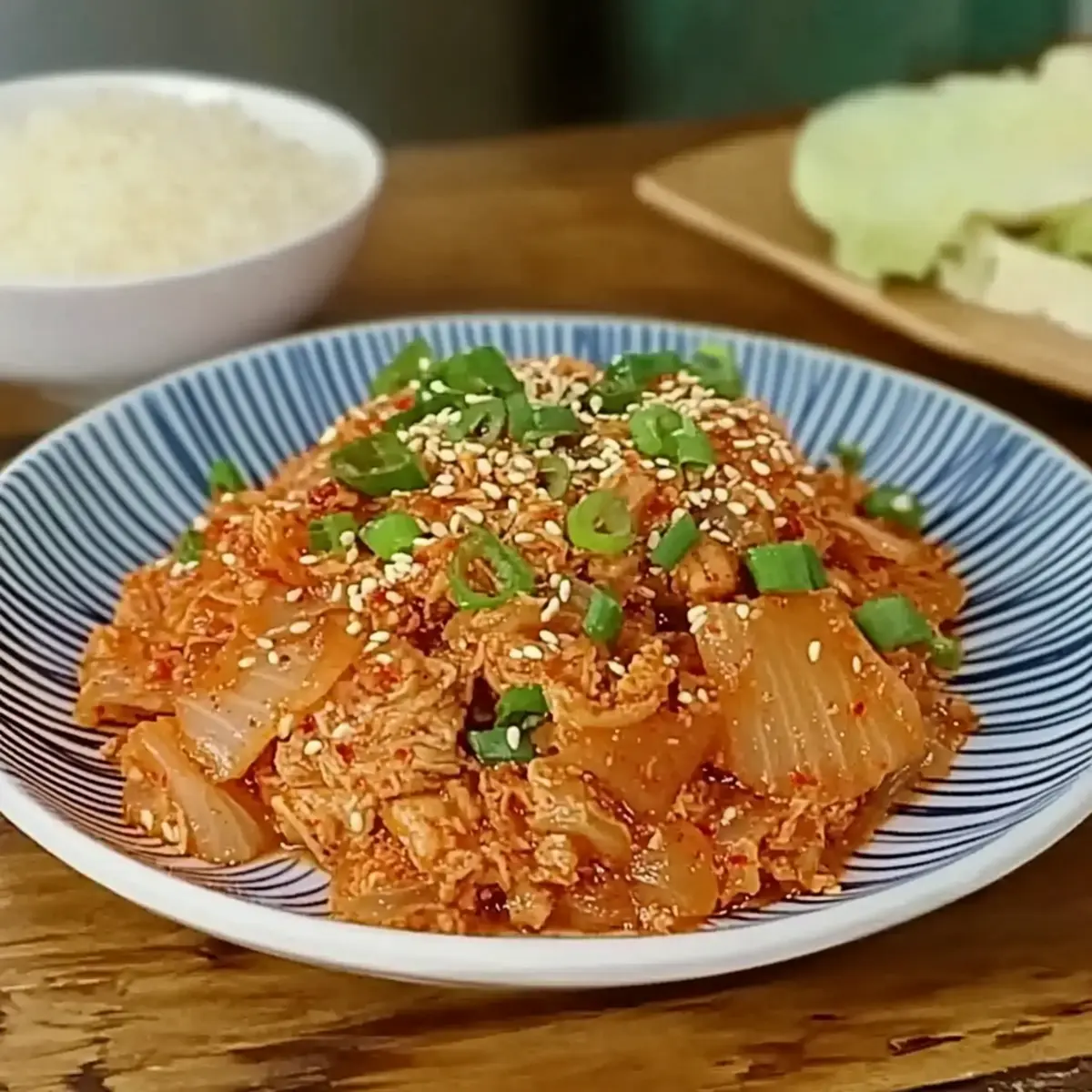
Once ready, remove the skillet from heat and transfer the stewed kimchi tuna to serving bowls. Garnish generously with toasted sesame seeds and finely chopped green onions for a fresh crunch. This vibrant dish is a perfect blend of flavors and textures, ready to be enjoyed over steamed rice or on its own.

Expert Tips for Stewed Kimchi Tuna
- Juices Matter: Always add the tuna with its juices; this step enhances the flavor and moisture of your stewed kimchi tuna, making it rich and savory.
- Onion Perfection: Cook the onions until they are fully translucent. This releases their natural sweetness, which beautifully balances the dish’s spices.
- Spice Control: Adjust the amount of gochugaru based on your spice tolerance; start with less, as you can always add more heat to your stewed kimchi tuna.
- Simmer Smartly: Monitor the dish while it simmers to prevent overcooking, which can cause the tuna to become dry and less enjoyable.
- Experiment Freely: Don’t hesitate to substitute proteins or add veggies to personalize your stewed kimchi tuna—variety keeps meals exciting!
Stewed Kimchi Tuna: Customize Your Dish
Feel free to personalize this recipe to match your taste preferences and dietary needs for an exciting twist on a classic!
-
Vegetarian Option: Swap the canned tuna for tofu, offering a delightful plant-based alternative that pairs beautifully with kimchi.
-
Extra Heat: Replace gochugaru with a spicy chili paste for an intensified kick, perfect for those who crave some serious spice!
-
Protein Variations: Use canned salmon instead of tuna for a richer flavor or switch to chickpeas for a hearty vegetarian source of protein.
-
Veggie Boost: Toss in chopped vegetables like bell peppers or zucchini for added texture and nutrients, making your dish even more colorful.
-
Gluten-Free Adjustments: If you need a gluten-free version, substitute the dashi powder with a trusted gluten-free fish sauce for a similar umami punch.
-
Flavored Oils: Try infusing your neutral oil with garlic or chili oil for an additional layer of flavor while sautéing.
-
Sweetness Tweak: Experiment with honey or coconut sugar instead of regular sugar for a unique twist on balancing the flavors.
-
Fermentation Lovers: If you’re a fan of kimchi, consider adding fresh or sauerkraut for a tangy crunch that’ll elevate the dish’s overall profile.
For even more variations, you might want to check out how to create perfect vegan kimchi or explore the wonderful world of Korean small side dishes that can complement your stewed kimchi tuna beautifully!
How to Store and Freeze Stewed Kimchi Tuna
- Fridge: Store your leftover stewed kimchi tuna in an airtight container for up to 2 days. This keeps the flavors intact and prevents spoilage.
- Freezer: If you’d like to keep it longer, you can freeze the stewed kimchi tuna in a freezer-safe container for up to 3 months. Let it cool before sealing to maintain freshness.
- Reheating: When ready to enjoy, thaw in the refrigerator overnight, then reheat gently on the stove or in the microwave until heated through. Add a splash of water if it seems dry.
- Avoid Refreezing: It’s best not to refreeze once it’s been thawed, as this can affect the texture and flavor of your stewed kimchi tuna.
What to Serve with Korean Home-Style Stewed Kimchi Tuna
When you’re ready to create a memorable meal experience, here are some delightful accompaniments to elevate your stewed kimchi tuna into a full feast.
-
Steamed Rice: A classic pairing that soaks up the savory broth, making each bite an explosion of flavor and comfort.
-
Kimchi Slaw: A fresh, crunchy side that adds a zingy crunch, balancing the richness of the tuna while staying true to Korean flavors.
-
Sesame Spinach Salad: Lightly dressed spinach with sesame oil offers a refreshing contrast, making every forkful feel vibrant and healthy.
-
Fried Rice: Transform leftovers into delicious fried rice that incorporates veggies, eggs, and even a touch of the kimchi tuna for an ultimate comfort dish.
-
Cucumber Kimchi: This fresh and tangy side brings a cool crispness to your meal, enhancing the umami flavors of the stewed kimchi tuna beautifully.
-
Savory Pancakes: Korean pajeon (green onion pancakes) matched with a soy dipping sauce is a delightful textural contrast, adding intrigue and heartiness.
Beverage Pairing: A chilled glass of Makgeolli (Korean rice wine) complements the flavors perfectly, while a light lager or green tea balances the spice with refreshing notes. Enjoy your meal!
Make Ahead Options
These Stewed Kimchi Tuna are ideal for meal prep, allowing you to streamline dinner on busy weeknights! You can chop the onions and prepare your kimchi mixture up to 24 hours in advance by storing it in an airtight container in the refrigerator. Additionally, you can open and drain the canned tuna ahead of time for ultimate convenience. When you’re ready to serve, simply heat your prepared mixture in a pan, add the tuna, and follow the remaining steps to bring the flavors together. This not only saves time but ensures that your dish remains just as delicious, with all the vibrant flavors intact when ready to enjoy!
Stewed Kimchi Tuna Recipe FAQs
How do I select the right kimchi?
When choosing kimchi for your stewed kimchi tuna, look for a product that is vibrant in color, with a balance of crunch and tenderness. Fresh kimchi should be aromatic and not overly sour. If you’re using homemade kimchi, ensure it’s fermented just enough to add complexity, but still has a lively crunch.
How can I store leftovers safely?
Store any leftover stewed kimchi tuna in an airtight container in the refrigerator for up to 2 days. Make sure to allow it to cool completely before sealing to maintain freshness. When ready to eat, reheat gently on the stove or in the microwave until warmed through.
Can I freeze stewed kimchi tuna?
Absolutely! To freeze your stewed kimchi tuna, transfer it into a freezer-safe container after cooling. Seal it tightly and store it for up to 3 months. For best results, thaw it in the refrigerator overnight before reheating. If it appears dry, add a splash of water during reheating to retain moisture.
What should I do if the dish turns out too spicy?
If your stewed kimchi tuna is a bit too spicy for your taste, don’t worry! You can balance the heat by adding a splash of coconut milk or a dollop of sour cream to tone it down. Additionally, serving it over steamed rice can help absorb the spice and make it more enjoyable.
Are there any dietary considerations to keep in mind?
If you have allergies, be aware that many store-bought kimchis contain fish sauce or shrimp paste. Always check the labels to ensure they meet your dietary needs. For a vegetarian option, substitute the tuna with tofu or chickpeas, ensuring the dashi powder is vegan or replaced with a suitable alternative like miso.
What’s the best way to reheat stewed kimchi tuna?
To reheat your stewed kimchi tuna effectively, place it in a saucepan over low heat, adding a small splash of water to prevent it from drying out. This gentle method will help retain the dish’s textures and flavors. Stir occasionally until it’s heated through, ensuring you don’t overcook the tuna.
Stewed Kimchi Tuna: Easy 10-Minute Flavor Explosion
Ingredients
Equipment
Method
- Heat a medium-sized skillet over medium heat for about 2 minutes. Add 1 tablespoon of neutral oil, making sure it coats the pan evenly.
- Add 1 finely chopped onion to the pan, stirring frequently for about 3 minutes until soft. Then, add 1 cup of kimchi, sauté for another 2 minutes.
- Introduce 1 can of tuna with its juices into the skillet, breaking it up slightly and mixing with onions and kimchi for about 2 minutes.
- Sprinkle 1 tablespoon of gochugaru and 1 teaspoon of dashi powder, and drizzle with 1 tablespoon of sesame oil. Stir well and cook for another minute.
- Add a pinch of sugar, mix, and gently simmer for 3 to 5 minutes until the dish bubbles lightly and flavors meld.
- Remove from heat and serve in bowls. Garnish with toasted sesame seeds and finely chopped green onions.
Leave a Reply