
The moment I first tasted ratatouille, I knew I had stumbled upon something special. This classic French dish is a celebration of summer, filled with vibrant, fresh vegetables that come together in a delightful medley. My version, a simple stovetop ratatouille, makes it easy for anyone to whip up this vegetarian delight with little fuss and maximum flavor. Perfect for warm-weather meals or as a comforting side, it also offers the added perk of showcasing seasonal produce at its best. Each bite of tender eggplant, zucchini, and bell peppers, infused with aromatic herbs, is like savoring the essence of Provence. Are you ready to transform your kitchen into a sunny French bistro? Let’s dive into making this comforting dish together!
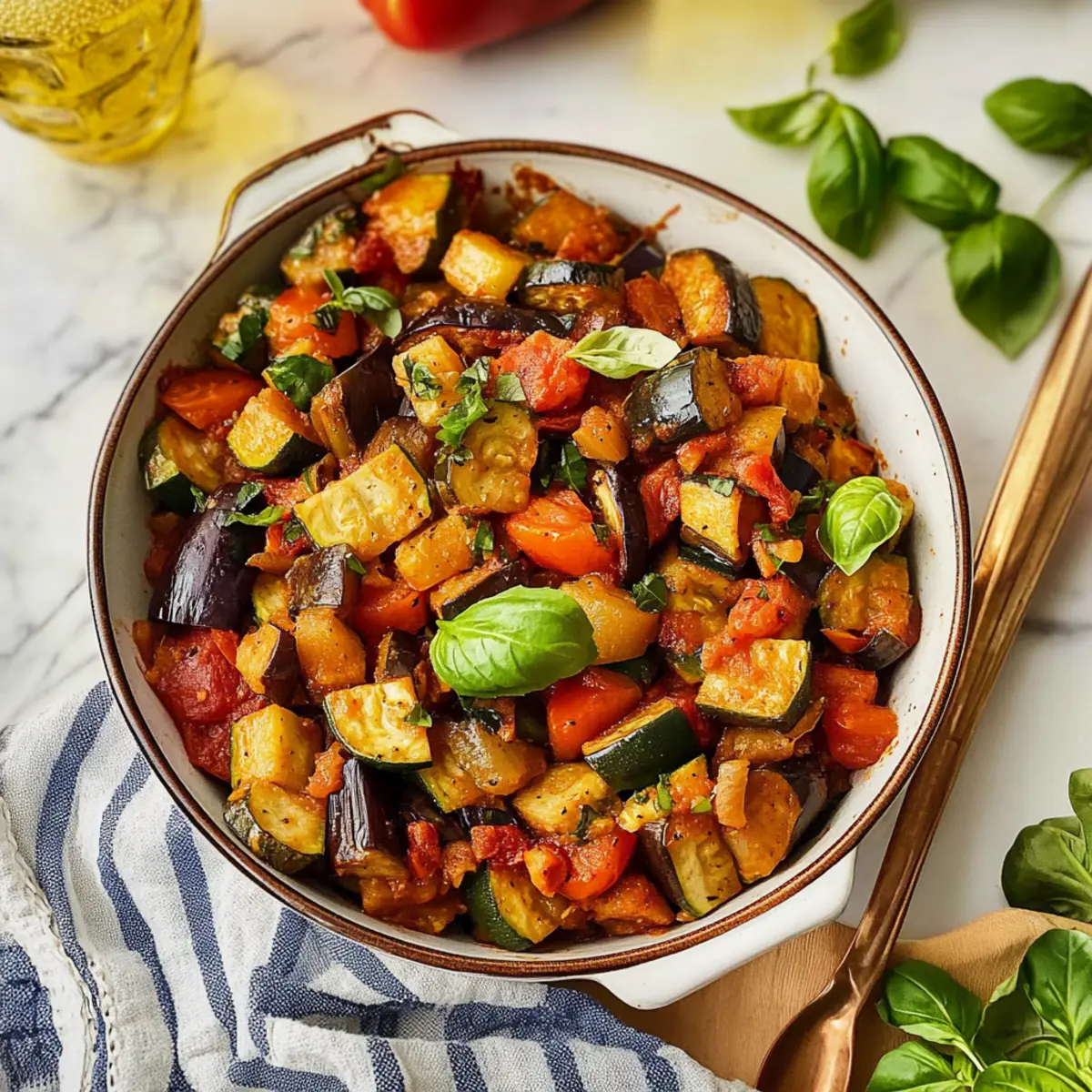
Why is Ratatouille So Irresistible?
Flavorful Explosion: Ratatouille brings together a vibrant mix of summer vegetables that celebrate seasonal flavors, making each bite an absolute delight!
Easy Preparation: No intricate techniques here—this simple stovetop version lets you enjoy the authentic taste with minimal effort.
Versatile Dish: Serve it warm as a hearty main, or use it as a delightful topping for grains or pasta, making it perfect for any occasion!
Wholesome Comfort: Packed with nutrients and bursting with herbal freshness, this vegetarian dish proves that comfort food can be healthy too.
Crowd-Pleasing Appeal: Impress your family and friends with this classic that appeals to both the palate and the eyes, bringing the spirit of Provence right to your table!
Ratatouille Ingredients
• Here’s what you’ll need to create this delicious ratatouille!
For the Vegetables
• Medium-Large Eggplant (1 lb) – Adds richness and a creamy texture. Substitution: Zucchini or mushrooms can be used for a lighter version.
• Medium Zucchini (1 lb) – Adds a mild flavor and tenderness. Prep Note: Cook until tender but maintain some firmness for a nice bite.
• Yellow Onion (1 medium) – Contributes sweetness and depth. Note: Dice evenly for even cooking.
• Red or Yellow Bell Pepper (1) – Adds a sweet and colorful component. Prep Note: Seed and chop into ½-inch pieces.
• Garlic Cloves (3, chopped) – Imparts aroma and flavor. Note: Add mid-way through cooking the peppers for optimal taste.
• Tomatoes on the Vine (1 lb) – Forms the base of the sauce, providing acidity and moisture. Prep Note: Cut into ½-inch pieces for quicker cooking.
For the Seasoning
• Sea Salt – Enhances flavor and helps draw moisture from the eggplant. Prep Note: Salt the eggplant and let it drain for 20 minutes to improve texture.
• Red Pepper Flakes (pinch) – Adds a subtle heat. Note: Adjust based on spice preference.
• Cane Sugar (pinch) – Balances acidity from tomatoes. Note: Use sparingly to allow the natural sweetness to shine.
• White Wine Vinegar (1 tbsp) – Brightens the dish with acidity. Note: Can substitute with balsamic or apple cider vinegar.
• Freshly Ground Black Pepper – Enhances flavor. Note: Adjust to taste.
For the Finishing Touches
• Extra-Virgin Olive Oil (6 tbsp) – Provides richness and aids in cooking the vegetables evenly. Note: Adjust as needed based on the moisture released by the veggies.
• Chopped Fresh Thyme Leaves (2 tsp) – Adds herbal notes. Substitution: Dried thyme (1 tsp) can be used in a pinch.
• Fresh Basil Leaves (¼ cup, sliced) – Provides freshness and a fragrant finish. Garnish: Use more torn basil for serving.
Step‑by‑Step Instructions for Ratatouille
Step 1: Prep Eggplant
Cube the medium-large eggplant into bite-sized pieces and sprinkle generously with sea salt. Allow it to drain in a colander for 20 minutes to draw out moisture and bitterness. After draining, blot the eggplant dry with a paper towel to ensure it’s ready for cooking.
Step 2: Cook Eggplant
In a large skillet, heat 3 tablespoons of extra-virgin olive oil over medium heat until shimmering. Add the prepared eggplant to the skillet and sauté until it becomes tender and golden, about 10 to 15 minutes. Stir occasionally to ensure even cooking, then transfer the eggplant to a bowl and set aside.
Step 3: Cook Zucchini
In the same skillet, pour in 1 tablespoon of olive oil and add the medium zucchini, chopped into half-moon slices. Sauté for 3 to 5 minutes, cooking until the zucchini is tender yet still retains a slight firmness. Season lightly with salt and pepper, then remove the zucchini and set it aside with the eggplant.
Step 4: Cook Onions and Peppers
Add the diced yellow onion and the chopped red or yellow bell pepper to the skillet. Cook for 5 minutes, stirring frequently until they soften and the onion turns translucent. Next, add the chopped garlic and cook for an additional 2 to 3 minutes until fragrant, ensuring the garlic doesn’t burn.
Step 5: Add Tomatoes
Stir in the diced tomatoes on the vine, followed by a pinch of red pepper flakes and a pinch of cane sugar to balance the acidity. Cook the mixture for 8 to 10 minutes until the tomatoes begin to break down and create a luscious sauce. Stir occasionally to prevent sticking.
Step 6: Combine & Simmer
Return the cooked eggplant and zucchini to the skillet, then mix in 1 tablespoon of white wine vinegar and the chopped fresh thyme leaves. Season the mixture with additional sea salt and freshly ground black pepper. Let everything simmer together for 10 to 15 minutes until thickened, stirring occasionally.
Step 7: Serve
Once thickened to your liking, stir in the fresh basil for a fragrant finish. Taste and adjust seasoning if necessary. Serve the ratatouille warm, garnished with extra torn basil, or allow it to cool to room temperature for a delightful side dish that highlights summer flavors.
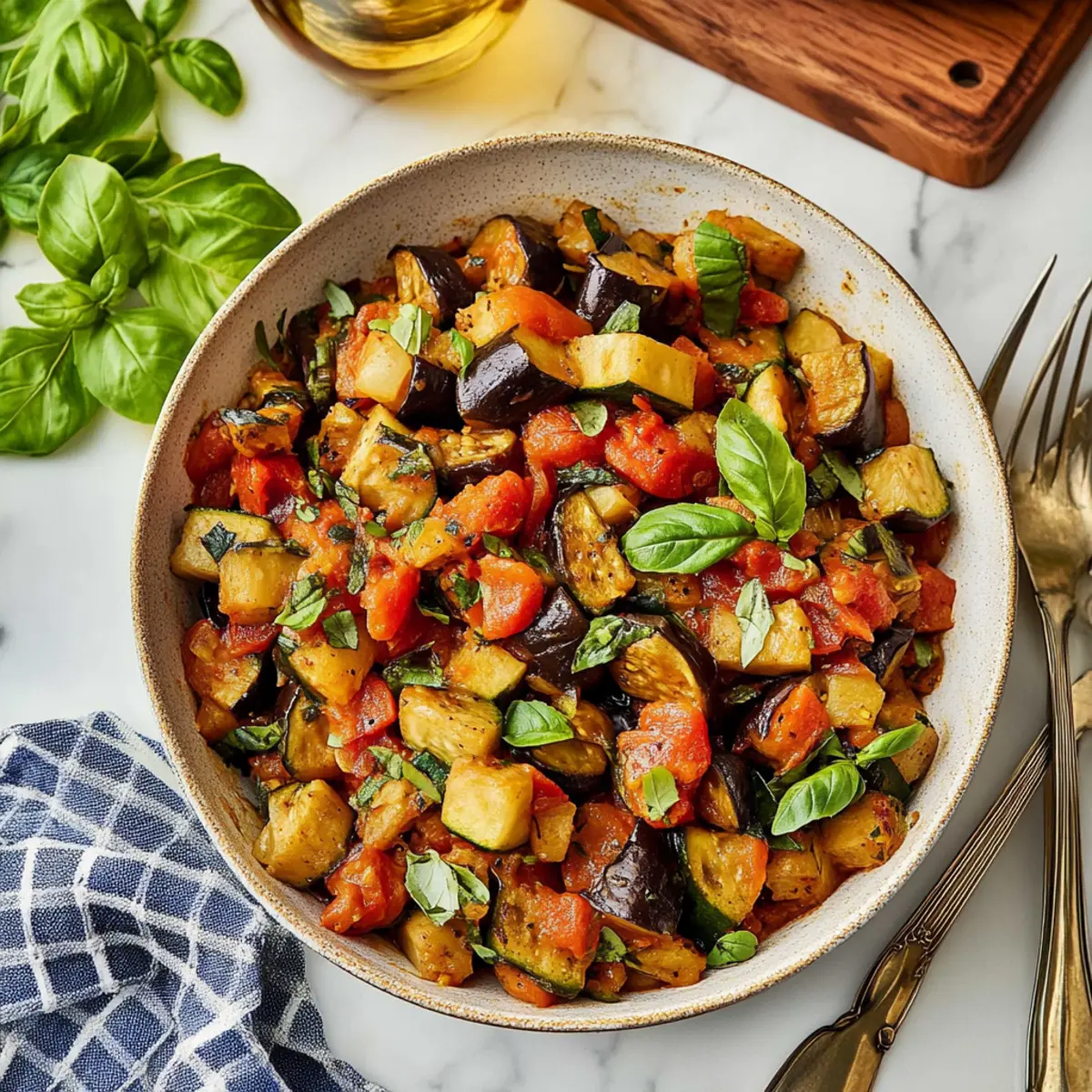
Tips for the Best Ratatouille
-
Salting the Eggplant: Make sure to salt and drain the eggplant beforehand. This step removes bitterness and ensures a firmer texture in your ratatouille.
-
Cook Individually: Sauté vegetables separately to promote even cooking and caramelization, avoiding a watery dish that can dull flavors.
-
Fresh Herbs Matter: Using fresh thyme and basil enhances the aromatic profile. If you need to, dried herbs can work in a pinch, but fresh provides the best taste.
-
Adjust Seasoning: Regularly taste your ratatouille as it cooks. This allows for adjustments to salt, pepper, and vinegar right before serving, ensuring maximum flavor.
-
Serve Warm or Room Temp: Ratatouille can be delicious both warm and at room temperature, making it versatile for any setting. Enjoy it as a main dish or complementing grains or pasta!
What to Serve with Classic Stovetop Ratatouille?
Pairing this delightful dish with complementary sides can elevate your dining experience, creating a symphony of flavors on your plate.
-
Crusty Baguette: A warm, crusty bread is perfect for soaking up the flavorful juices of the ratatouille. Each bite feels like a warm embrace!
-
Creamy Polenta: Soft and creamy polenta provides a rich base that balances the rustic vegetables, adding a comforting texture to each mouthful.
-
Simple Green Salad: A refreshing mixed greens salad dressed with a light vinaigrette provides a crisp contrast to the tender ratatouille, enhancing your meal’s overall balance.
-
Roasted Potatoes: Crispy roasted potatoes add a hearty, satisfying crunch to the table, making it an ideal pairing with the tender veggies.
-
Garlic Bread: The aromatic flavors of garlic bread complement the dish beautifully and invite you to dive in with gusto, creating a delicious medley.
-
Herbed Quinoa: Fluffy quinoa tossed with fresh herbs offers a subtle nutty flavor and extra protein, making the meal wholesome and fulfilling.
-
Chardonnay: A chilled glass of Chardonnay beautifully complements the flavors of ratatouille, providing a wonderful balance with its bright acidity.
-
Lemon Sorbet: For a refreshing dessert, lemon sorbet cleanses the palate, leaving you with a light and zesty finish to your meal.
Ratatouille Variations & Substitutions
Feel free to customize your ratatouille and make it your own by experimenting with these delicious twists!
- Dairy-Free: Swap out any butter for olive oil to keep this dish vegan-friendly while retaining its rich flavor.
- Add Protein: Incorporate cooked white beans or chickpeas for a hearty touch and an extra dose of protein. This addition turns a side into a satisfying main.
- Seasonal Twist: Substitute bell peppers with other veggies like zucchini or squash for a vibrant, seasonal update—perfect during the summer harvest!
- Herb Infusion: Use fresh herbs like basil, oregano, or marjoram in addition to thyme for a varied flavor profile that dances with aromatic freshness.
- Spicy Kick: If you love heat, add sliced jalapeños or a dash of hot sauce to elevate the spice level and bring some kick to your ratatouille.
- Roasted Flavor: For a depth of flavor, try roasting the vegetables in the oven before adding them to the stew. It brings out a wonderful sweetness.
- Grain Base: Serve your ratatouille over quinoa, couscous, or rice instead of bread for a whole grain twist that elevates your meal.
- Serving Styles: This ratatouille is not just a standalone dish; pour it over pasta, or spoon it onto a pizza for a tasty and unexpected topping.
Explore these combinations and discover what makes your taste buds dance. And if you’re interested in adding even more nutrition to your meals, check out how to incorporate healthy grains with quinoa or add more flavor with homemade herb pastes! Enjoy your culinary adventure!
How to Store and Freeze Ratatouille
Fridge: Store leftovers in an airtight container in the refrigerator for up to 4 days to maintain freshness.
Freezer: For longer storage, freeze ratatouille in portions for up to 3 months. Use freezer-safe containers or bags, removing excess air.
Reheating: Reheat thawed ratatouille gently on the stovetop or in the microwave until heated through, stirring occasionally to maintain texture.
Taste Check: Always taste and adjust seasoning after reheating, as flavors can mellow during storage.
Make Ahead Options
These delicious Ratatouille preparations are perfect for busy home cooks! You can prep the vegetables, such as chopping the zucchini, bell peppers, and tomatoes, up to 24 hours in advance. Simply store them in an airtight container in the refrigerator to keep them fresh. Additionally, you can salt and drain the eggplant a day ahead, ensuring a firmer texture when cooked. When you’re ready to serve, simply follow the final cooking steps to sauté the prepped ingredients and let everything simmer together. This way, you’ll enjoy a hearty Ratatouille with minimal effort, making your mealtime smoother and just as delicious!
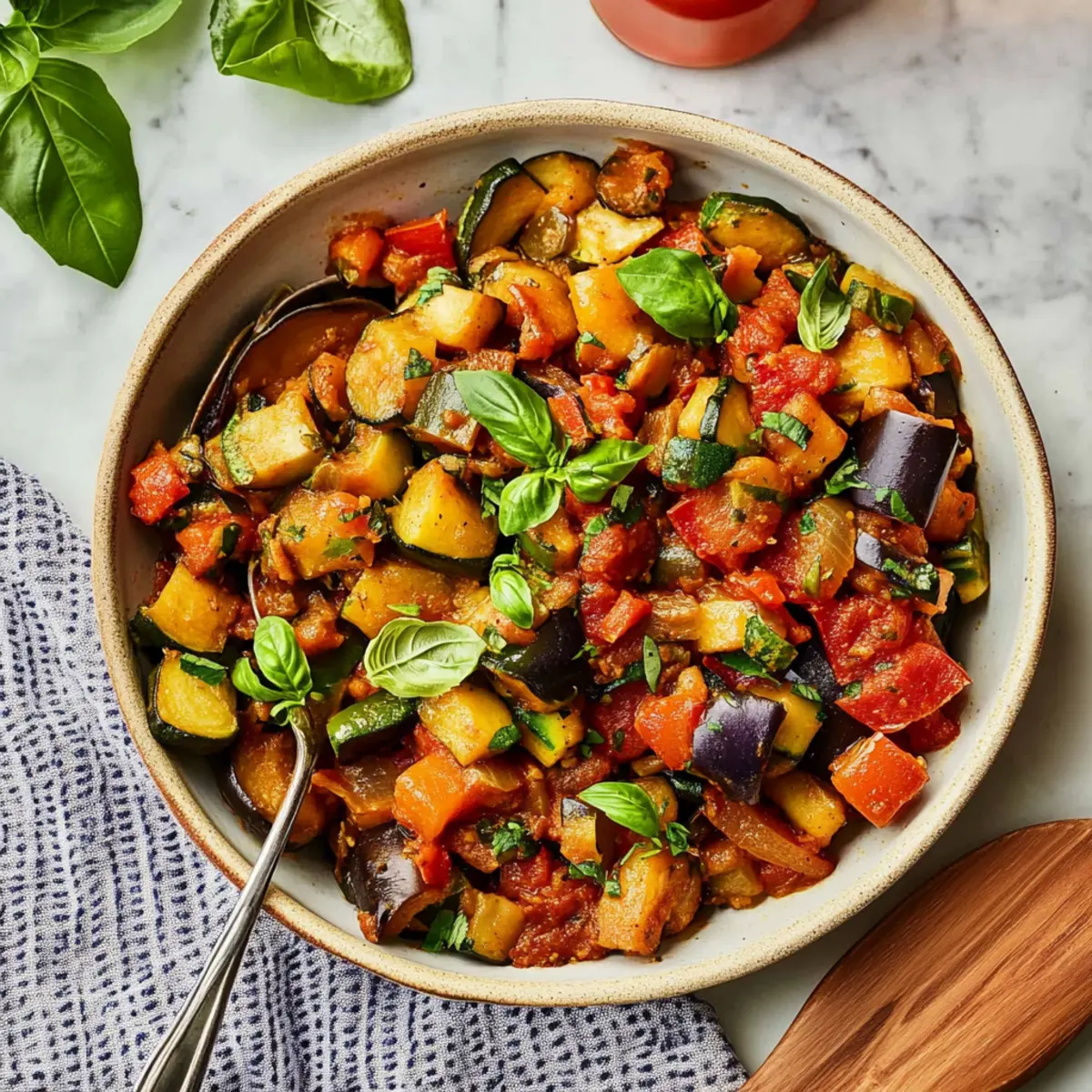
Classic Stovetop Ratatouille Recipe FAQs
What vegetables should I choose for making ratatouille?
Absolutely! For a vibrant ratatouille, choose ripe, fresh vegetables. Look for eggplants that are firm and glossy, zucchini that’s bright and unblemished, and bell peppers that are plump and brightly colored. When selecting tomatoes, opt for ones that feel slightly soft to the touch, indicating ripeness. If you see dark spots or wrinkling, that may mean they’re past their peak.
How should I store leftovers of ratatouille?
Very! To store leftovers, allow the ratatouille to cool completely, then transfer it into an airtight container. It can last in the fridge for up to 4 days. Just reheat gently on the stovetop when you’re ready to enjoy it again. If you prefer, you can also freeze it for extended shelf life.
Can I freeze ratatouille, and if so, how?
Of course! Freezing ratatouille is a great way to enjoy it later. Allow the dish to cool fully after cooking, then portion it out into freezer-safe containers or resealable bags. Remove as much air as possible before sealing. You can freeze it for up to 3 months. When you’re ready to eat, let it thaw in the refrigerator overnight and reheat on the stovetop until heated through.
What if my ratatouille turns out watery?
No worries! If your ratatouille is watery, it could be due to the water content in the vegetables or if you skipped salting the eggplant. To fix this, you can try simmering your ratatouille for a longer period to cook off excess liquid. Alternatively, you can cook the vegetables separately next time to get that perfect texture and prevent excess moisture from being released into the dish.
Is this ratatouille recipe safe for my pets to eat?
Great question! While ratatouille is packed with healthy vegetables, it’s important to note that onions and garlic can be harmful to pets, especially dogs and cats. I recommend keeping your furry friends away from this dish. If you want a pet-friendly version, you could make a simple vegetable medley without those ingredients.
Can I substitute any of the ingredients in ratatouille?
Absolutely! Ratatouille is very versatile. If you’re out of eggplant, zucchini, or bell peppers, you can swap them for seasonal veggies like squash, carrots, or even mushrooms. Dried herbs can be used instead of fresh thyme if you need to, just remember to use a smaller amount (1 teaspoon for each tablespoon of fresh). Cooking can be an adventure, so feel free to explore!
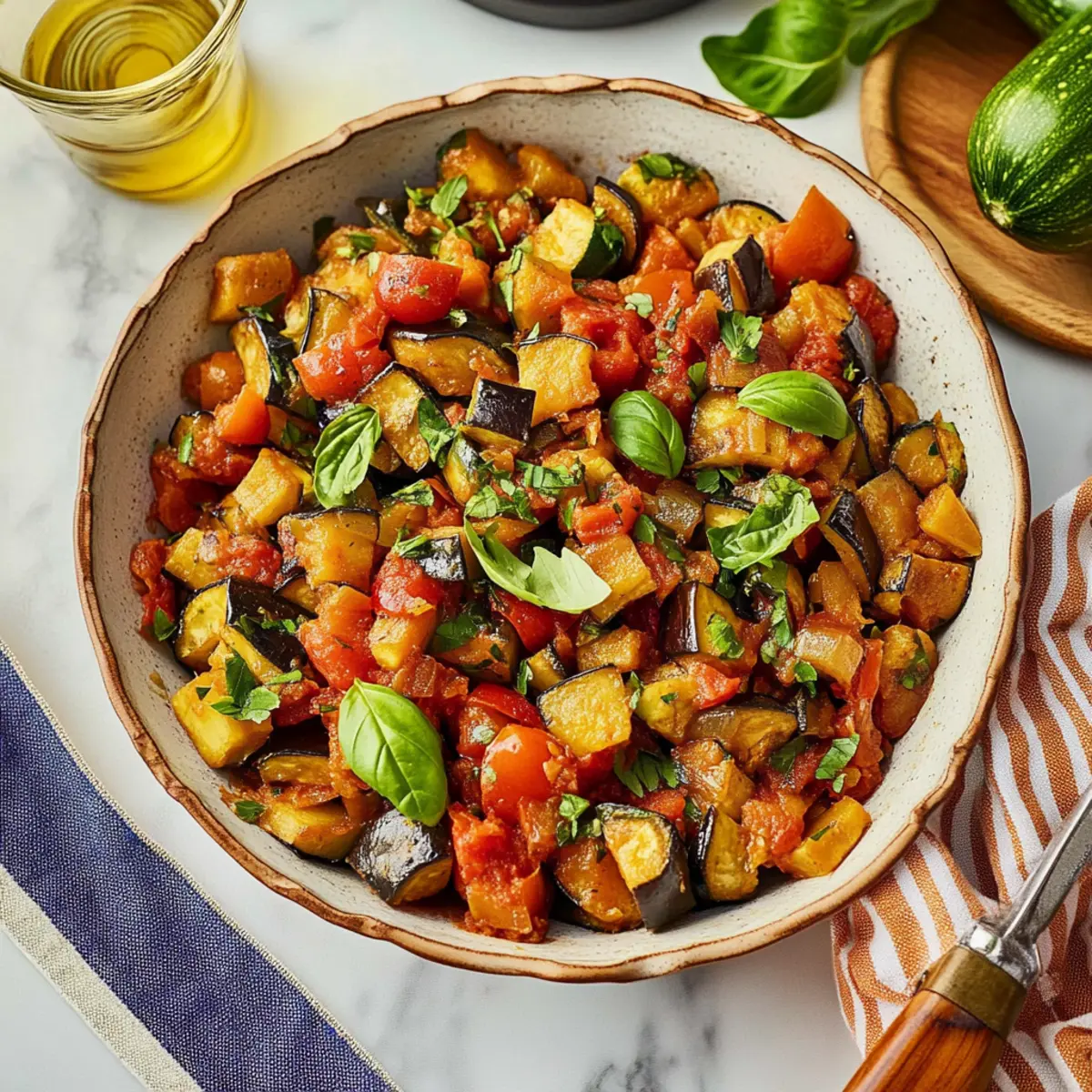
Quick and Easy Ratatouille with Fresh Summer Veggies
Ingredients
Equipment
Method
- Cube the medium-large eggplant into bite-sized pieces and sprinkle generously with sea salt. Allow it to drain in a colander for 20 minutes to draw out moisture and bitterness.
- In a large skillet, heat 3 tablespoons of extra-virgin olive oil over medium heat until shimmering. Add the prepared eggplant and sauté until tender and golden, about 10 to 15 minutes.
- In the same skillet, pour in 1 tablespoon of olive oil and add the medium zucchini, chopped into half-moon slices. Sauté for 3 to 5 minutes, cooking until tender yet still retains a slight firmness.
- Add the diced yellow onion and the chopped bell pepper to the skillet. Cook for 5 minutes, stirring frequently until they soften. Add chopped garlic and cook for an additional 2 to 3 minutes until fragrant.
- Stir in the diced tomatoes on the vine, followed by a pinch of red pepper flakes and cane sugar. Cook for 8 to 10 minutes until the tomatoes begin to break down.
- Return the cooked eggplant and zucchini to the skillet, mix in 1 tablespoon of white wine vinegar and chopped fresh thyme leaves. Season with additional sea salt and black pepper.
- Once thickened to your liking, stir in fresh basil. Taste and adjust seasoning if necessary. Serve warm, garnished with torn basil.
Leave a Reply