
A waft of coconut and spice fills the kitchen as the pot simmers gently on the stove. This isn’t just any ordinary soup; this is my quick and easy Thai Coconut Curry Soup. Perfect for those chilly evenings when you crave something warm and satisfying, this comforting dish melds the rich creaminess of coconut with a hint of heat from red curry paste. In under 30 minutes, you can serve up a fragrant, flavorful bowl that’s not only a breeze to prepare but also a show-stopping crowd-pleaser. Plus, it’s a versatile delight—swap chicken for tofu for a delightful vegan option! So, are you ready to dive into something warm and comforting? Let’s create a memorable meal together!
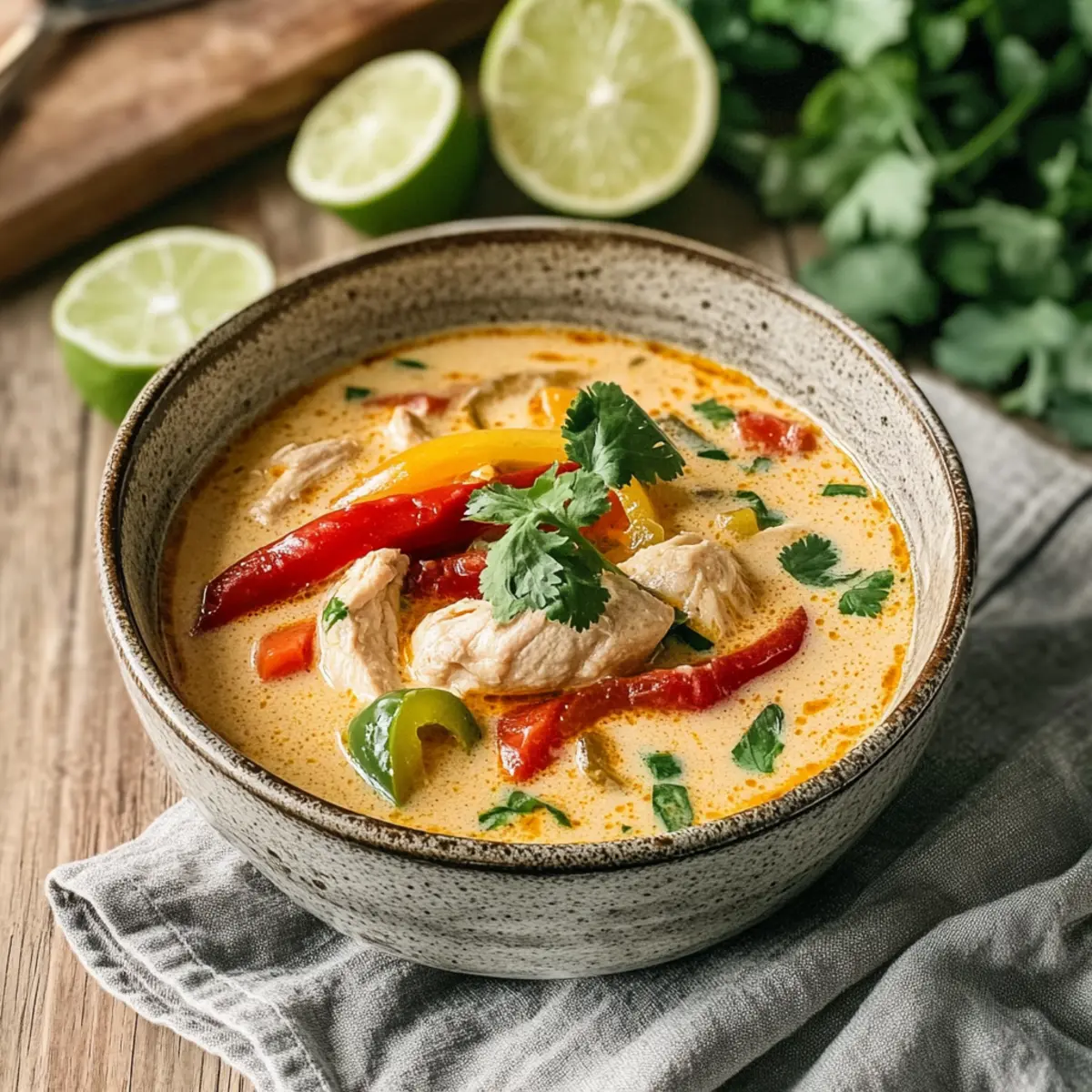
Why is Thai Coconut Curry Soup a must-try?
Flavor Explosion: This soup combines rich coconut milk with zesty red curry, delivering a vibrant taste experience that tantalizes your taste buds.
Quick and Easy: Preparation is a breeze! In just under 30 minutes, you can whip up a bowl of comfort, making it perfect for busy weeknights.
Versatility: Experiment by swapping chicken for tofu for a vegan twist that still packs a flavorful punch.
Crowd Favorite: Ideal for diners of all kinds, this dish will please and impress everyone at the table, whether they’re fans of Thai cuisine or just love comforting soups like Alfredo Lasagna Soup.
Nourishing Goodness: With wholesome ingredients like bell peppers and fresh herbs, you’ll be nourishing your body while indulging in a delightful meal!
Thai Coconut Curry Soup Ingredients
Unlock the secrets to this comforting dish!
For the Soup Base
- Coconut Milk – Use full-fat coconut milk for extra creaminess; light versions may yield thinner results.
- Red Curry Paste – Adds delightful heat; start with 3 tablespoons for a balanced spice level.
- Fish Sauce – Elevates umami flavor; swap for soy sauce for a vegetarian alternative.
- Garlic – Minced to enhance the aroma and bring out flavors quickly.
For the Protein
- Chicken Breast – Slice thinly to ensure tender, quick-cooking pieces; firm tofu can be used for a gluten-free option.
For the Vegetables
- Bell Peppers – Chopped into uniform strips to provide sweetness and texture.
- Chili Flakes (optional) – Introduces an extra kick if you like additional heat!
For Garnishing
- Fresh Cilantro – Adds brightness and freshness; green onions can substitute if desired.
- Lime – Serve with wedges to brighten the dish and elevate flavors; it makes a world of difference!
With these ingredients, you’re just a step away from crafting your own Thai Coconut Curry Soup, perfect for cozy dinners or when you need that warm hug in a bowl!
Step‑by‑Step Instructions for Thai Coconut Curry Soup
Step 1: Prepare Ingredients
Begin by gathering your ingredients for the Thai Coconut Curry Soup. Thinly slice the chicken breast against the grain to ensure tenderness, then chop the bell peppers into uniform strips for even cooking. Mince the garlic and chop the fresh cilantro, setting everything aside so you can work smoothly and efficiently.
Step 2: Sauté Garlic
In a large saucepan or Dutch oven, heat a couple of tablespoons of neutral oil over medium heat. Once the oil shimmers, add the minced garlic, sautéing for about 1 minute until fragrant. Keep an eye on the garlic to prevent burning; this step will create a flavorful base for your soup.
Step 3: Add Red Curry Paste
Next, stir in the red curry paste, cooking for an additional 2 minutes. This allows the paste to bloom and releases its delightful aromas. Stir continuously to ensure the paste evenly mixes with the oil and garlic, intensifying the flavor of your Thai Coconut Curry Soup.
Step 4: Incorporate Coconut Milk
Pour in the full-fat coconut milk, stirring to create a smooth and creamy base for your soup. Increase the heat slightly until the mixture comes to a gentle simmer, characterized by small bubbles. Be cautious not to let it boil, as this can affect the coconut milk’s smooth texture.
Step 5: Add Protein and Vegetables
Once simmering, introduce the sliced chicken and bell peppers into the pot. Allow the mixture to simmer for 10-12 minutes, stirring occasionally, until the chicken is opaque and cooked through (reaching an internal temperature of 165°F / 74°C). The bell peppers should remain vibrant and slightly tender, adding texture to your soup.
Step 6: Season the Soup
After ensuring the chicken is cooked, stir in fish sauce and brown sugar to balance the flavors of the Thai Coconut Curry Soup. If you enjoy a bit of heat, sprinkle in some chili flakes, and let the soup simmer for an additional 5 minutes. This melding of flavors will create a comforting bowl you won’t want to miss.
Step 7: Final Adjustments and Serve
Taste the soup and make any necessary adjustments to the seasoning based on your preference. Once satisfied, ladle the Thai Coconut Curry Soup into bowls. Garnish each serving generously with fresh cilantro and serve alongside lime wedges for a zesty, flavorful finish. Enjoy the warmth and richness of this delightful dish!
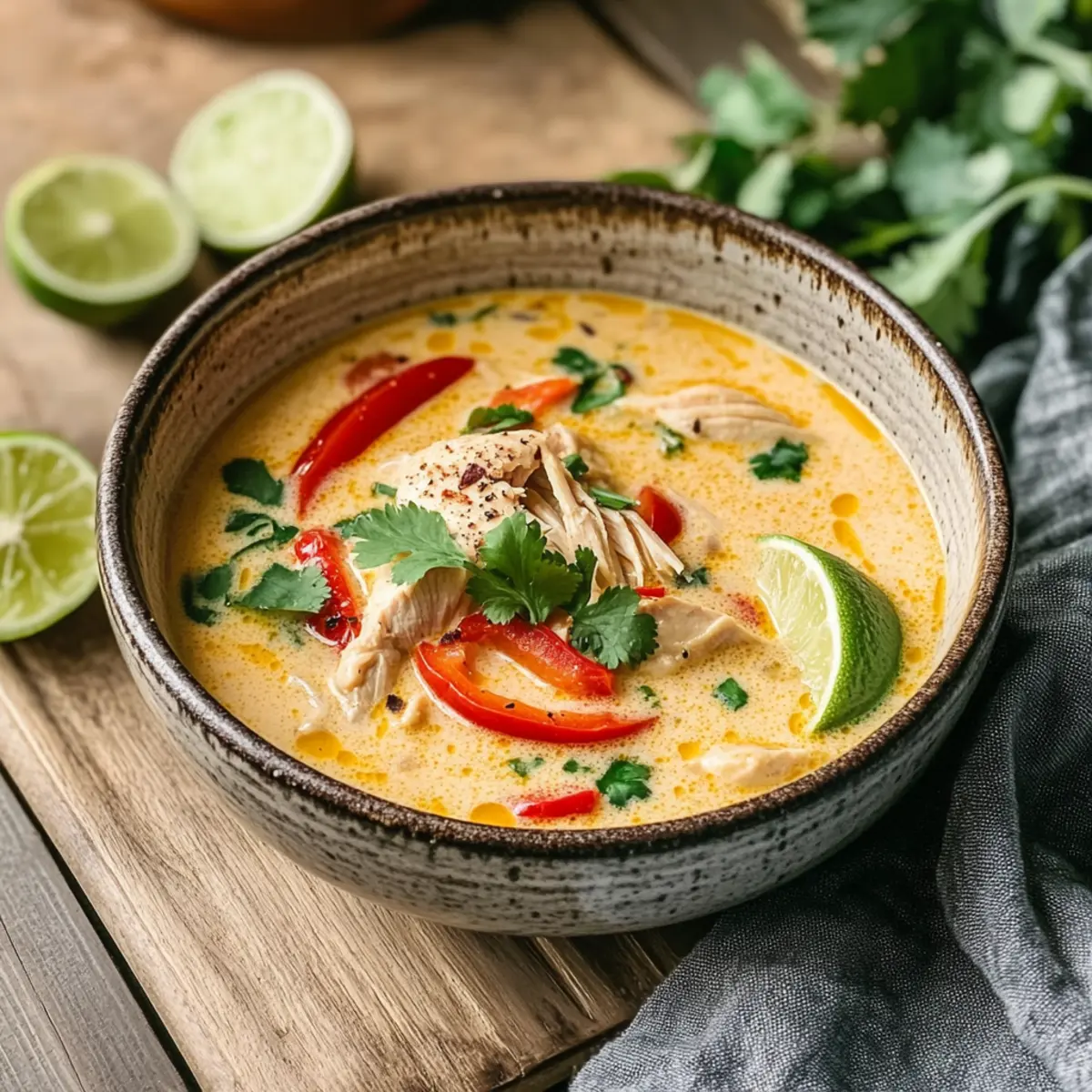
Thai Coconut Curry Soup Variations
Feel free to play with this recipe and make it your own—it’s all about personal touch!
-
Vegan Twist: Substitute chicken with 14 ounces of firm tofu and swap fish sauce for soy sauce to keep it plant-based.
-
Extra Aromatics: Add kaffir lime leaves or lemongrass during cooking for an enchanting aroma; just remember to remove before serving!
-
Spice it Up: Increase the red curry paste amount or toss in fresh chilies for a fiery kick that’ll warm you up from the inside out.
-
Creamy Indulgence: Stir in a dollop of peanut butter for a nutty flavor that complements the coconut beautifully, creating a rich and creamy texture.
-
Crunch Factor: Add fresh vegetables like snap peas or baby corn for additional crunch and vibrant colors, making every bite exciting!
-
Mellow It Down: If the flavor is too intense, add more coconut milk or vegetable broth to create a lighter, more soothing dish.
-
Herb Infusion: Throw in fresh basil or Thai basil for a delightful herbal note that elevates the authenticity of your soup.
-
Citrusy Boost: Zest some lime into the soup right before serving to amplify the zesty flavors and brighten the entire dish, enhancing your taste experience!
By exploring these variations, you can customize your Thai Coconut Curry Soup to suit your own tastes and preferences. And don’t forget, leftovers pair perfectly with a side of delightful Alfredo Lasagna Soup for the next day!
Expert Tips for Thai Coconut Curry Soup
• Gentle Simmer: Maintain a gentle simmer to keep the coconut milk creamy; boiling can cause it to separate and affect texture.
• Ingredient Prep: Always slice chicken against the grain for tenderness and prepare all ingredients in advance to streamline cooking.
• Adjust Spice: Start with 3 tablespoons of red curry paste, adjusting according to your heat preference—taste as you go!
• Taste and Tweak: Don’t hesitate to adjust seasonings toward the end. A splash of lime or a sprinkle of salt can elevate your Thai Coconut Curry Soup’s flavors.
• Garnish Generously: Fresh cilantro adds brightness; don’t skip it! Lime wedges will also enhance the soup’s deliciousness.
How to Store and Freeze Thai Coconut Curry Soup
Fridge: Store leftover Thai Coconut Curry Soup in an airtight container for up to 3 days. Reheat gently on the stove, adding a splash of water or coconut milk to restore creaminess.
Freezer: Freeze the soup for up to 3 months. For optimal texture, freeze the broth without the chicken or tofu; add the protein fresh when reheating.
Thawing: Thaw overnight in the fridge before reheating, or use the microwave for quicker defrosting.
Reheating: When reheating, restore creaminess by stirring in a little coconut milk and warming slowly over medium heat. Enjoy the comforting flavors again!
What to Serve with Quick and Easy Thai Coconut Curry Soup
A warm and fragrant bowl of this comforting soup deserves delicious companions to create a satisfying meal experience.
- Jasmine Rice: This fluffy, aromatic rice is perfect for soaking up the rich coconut broth, making each bite even more satisfying.
- Crusty Baguette: A loaf of fresh, crusty bread complements the soup beautifully, ideal for dipping and sopping up every last drop.
- Fresh Spring Rolls: Light, crisp spring rolls wrapped in rice paper bring a refreshing crunch that contrasts the soup’s creamy texture.
- Roasted Vegetables: Oven-roasted carrots and asparagus with a hint of olive oil add a delightful sweetness and lovely balance to the meal.
- Spicy Papaya Salad: This bright and tangy salad enhances the flavor profile, incorporating fresh ingredients that elevate each spoonful.
Pairing your Thai Coconut Curry Soup with these delightful side dishes ensures a satisfying meal that warms both heart and stomach. Enjoy!
Make Ahead Options
This Thai Coconut Curry Soup is perfect for meal prep, making it easy to have a comforting dish ready when you need it! You can chop all your vegetables and slice the chicken (or tofu) up to 24 hours in advance—just keep them in an airtight container in the refrigerator to maintain freshness. If you prefer, you can also prepare the soup base (without adding the protein) and store it for up to 3 days. When you’re ready to enjoy, simply reheat the soup base gently and add your protein, simmering until cooked through. This way, you’ll have a warm, flavorful bowl of Thai Coconut Curry Soup that tastes just as delicious as if you made it fresh!
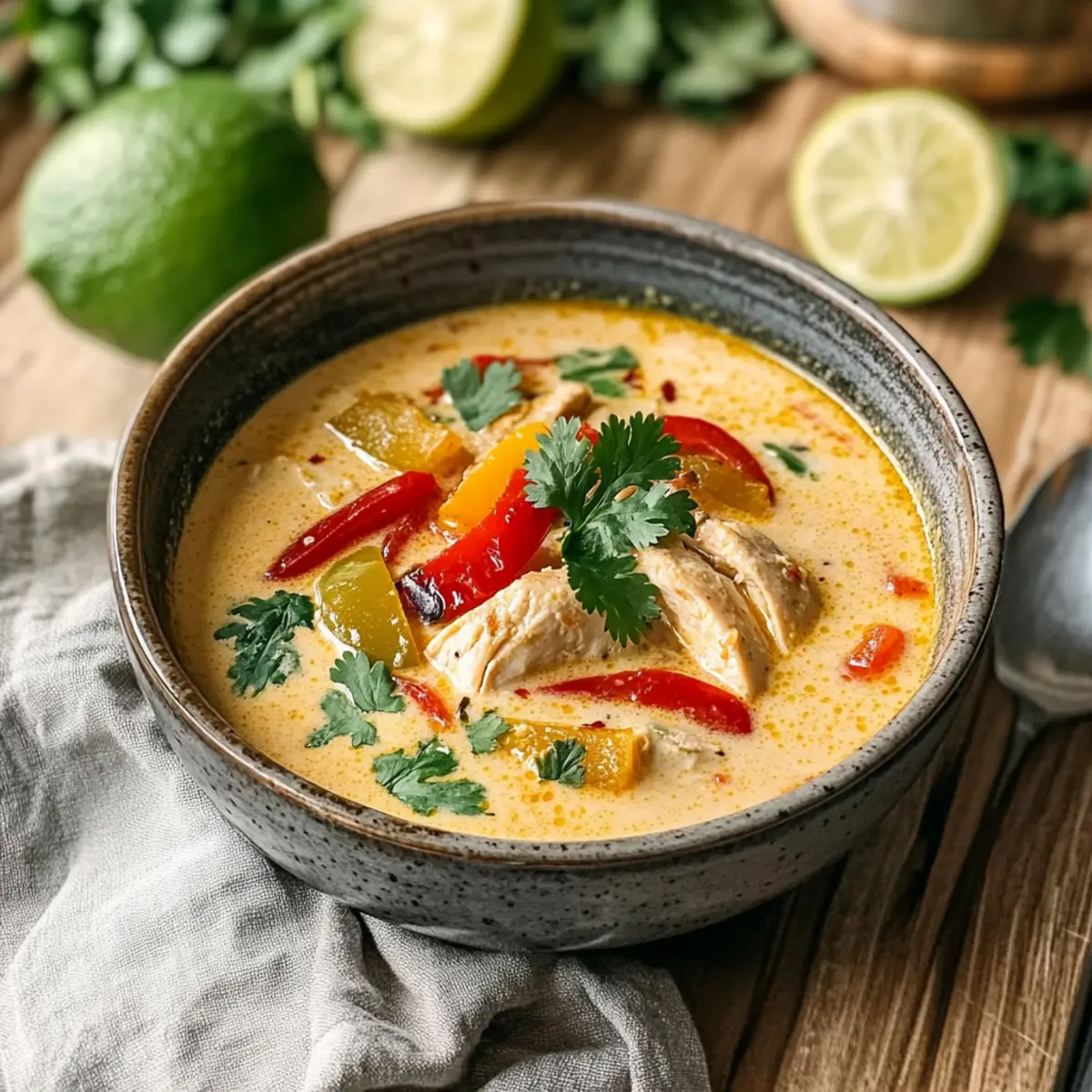
Thai Coconut Curry Soup Recipe FAQs
How do I select the best ingredients for my Thai Coconut Curry Soup?
Absolutely! When choosing your ingredients, aim for cans of full-fat coconut milk for that luscious creaminess. Fresh bell peppers should be bright and firm; any soft or wrinkled ones may be overripe. Also, look for red curry paste with a vibrant color—this indicates fresher spices that will enhance your soup.
What is the best way to store leftover Thai Coconut Curry Soup?
You’ll want to store your leftovers in an airtight container in the fridge. They’ll stay fresh for up to 3 days. Just reheat gently on the stove, adding a splash of water or coconut milk to restore that signature creaminess!
Can I freeze Thai Coconut Curry Soup, and if so, how?
Very! To freeze, allow the soup to cool completely. Transfer it to a freezer-safe container, leaving some space for expansion. For the best texture, freeze the broth without any chicken or tofu—a tip I often recommend. When you’re ready to enjoy again, just reheat with freshly cooked protein stirred in for a delightful taste!
What if my soup turns out too thick or too spicy?
If your soup is too thick, add a bit of water or additional coconut milk to thin it out gradually until you reach your desired consistency. If it’s too spicy, you can balance the heat by stirring in a bit of brown sugar or extra coconut milk to mellow it down. Remember, taste as you go!
Are there any dietary adjustments I should consider when making Thai Coconut Curry Soup?
Yes! If you’re making this soup for someone with dietary restrictions, swapping chicken for firm tofu maintains the dish’s heartiness while catering to vegan diets. You can also use soy sauce instead of fish sauce for those avoiding seafood. Always check for allergies to any specific ingredients, especially the fish sauce or any spices.
Can I add other vegetables to the Thai Coconut Curry Soup?
Certainly! The more, the merrier! You can incorporate veggies like spinach, snap peas, or carrots. Just make sure to cut them into even pieces, adding them during the simmering step to allow them to cook through but still retain a bit of crunch—a delightful way to personalize your soup!
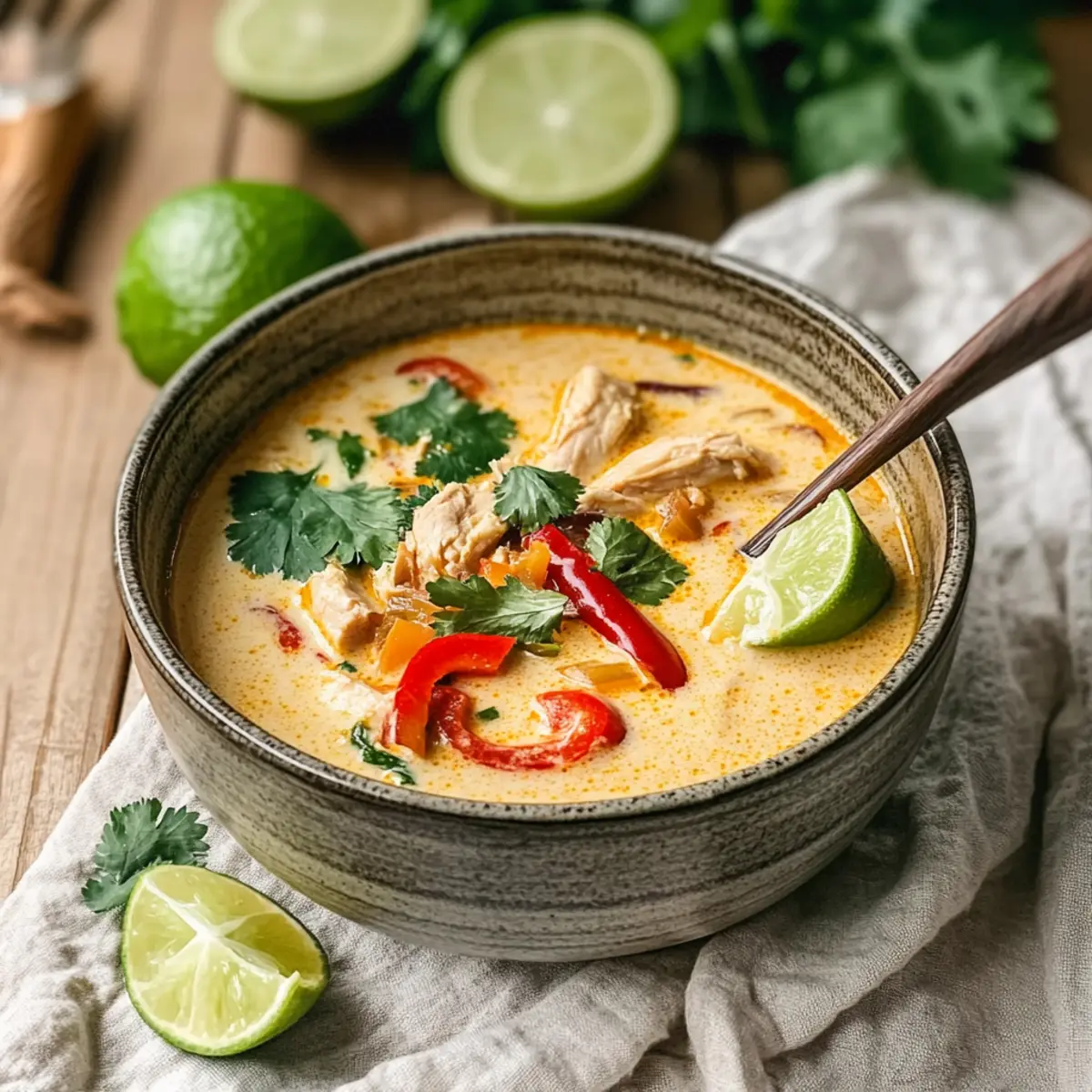
Irresistible Thai Coconut Curry Soup: Comfort in a Bowl
Ingredients
Equipment
Method
- Begin by gathering your ingredients. Slice chicken and chop vegetables as directed.
- In a large saucepan, heat neutral oil and sauté minced garlic for 1 minute until fragrant.
- Stir in red curry paste and cook for 2 minutes.
- Pour in coconut milk, stir, and bring to a gentle simmer.
- Add sliced chicken and bell peppers, simmer for 10-12 minutes until chicken is cooked.
- Stir in fish sauce and brown sugar; add chili flakes if desired.
- Taste and adjust seasoning; garnish with cilantro and serve with lime wedges.
Leave a Reply