
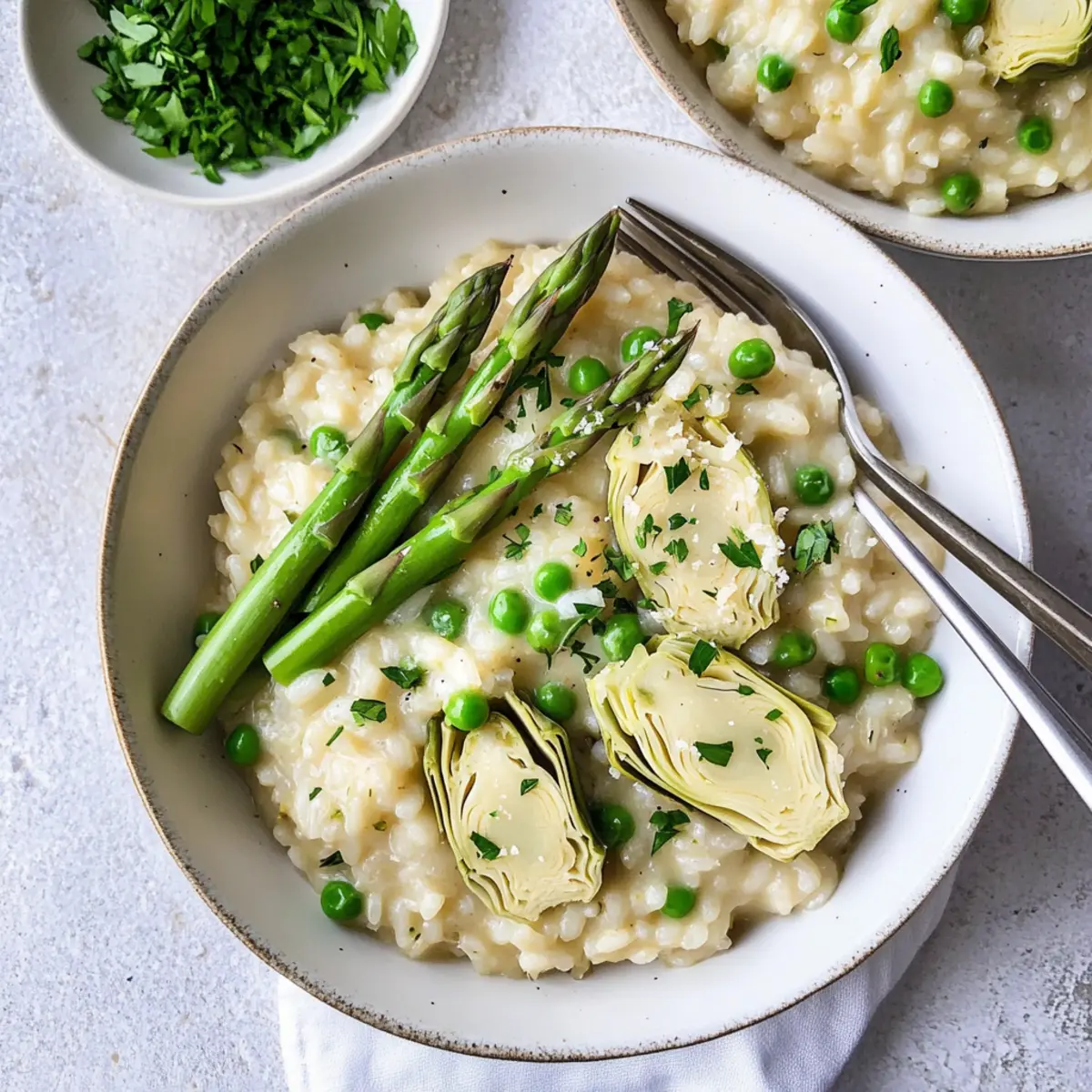
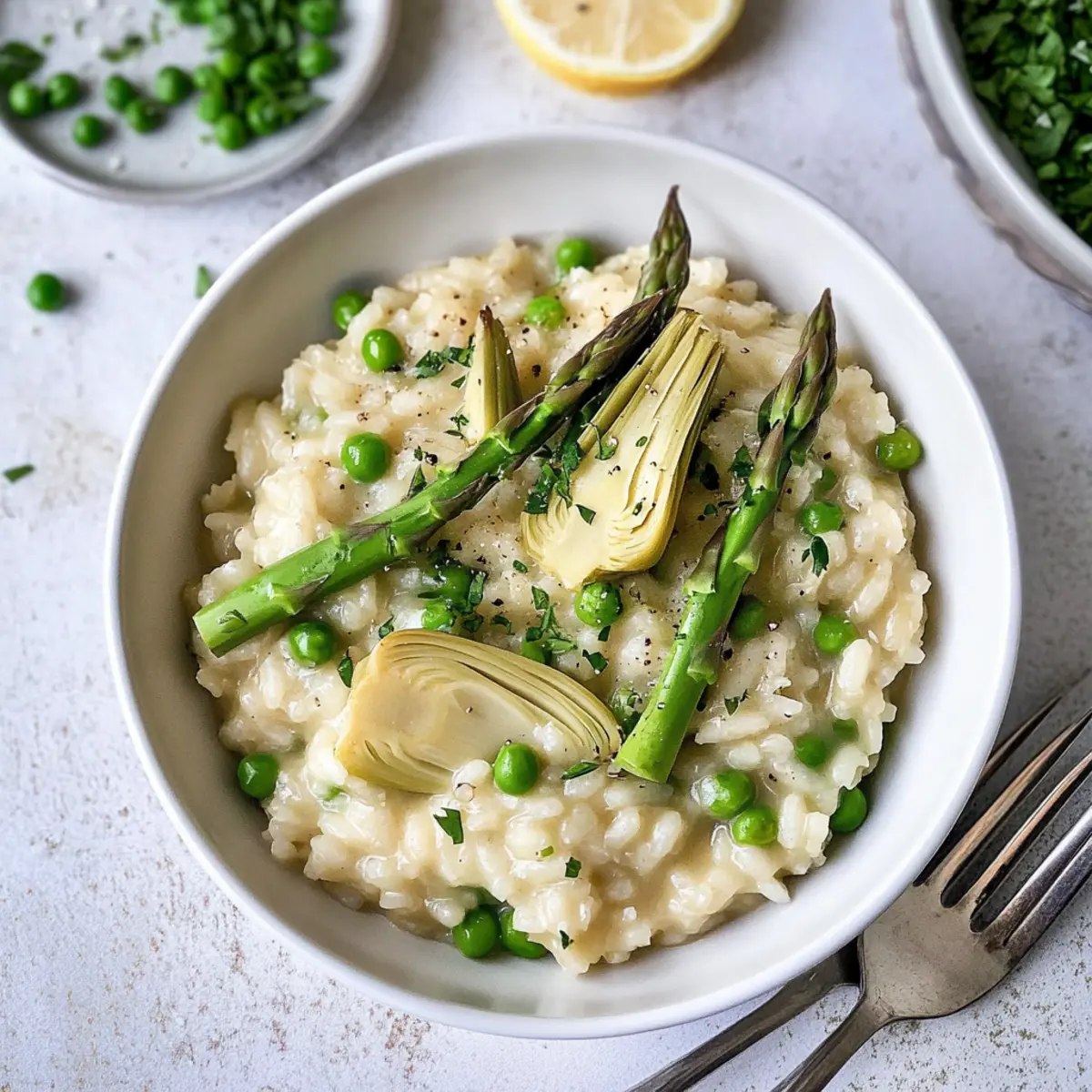
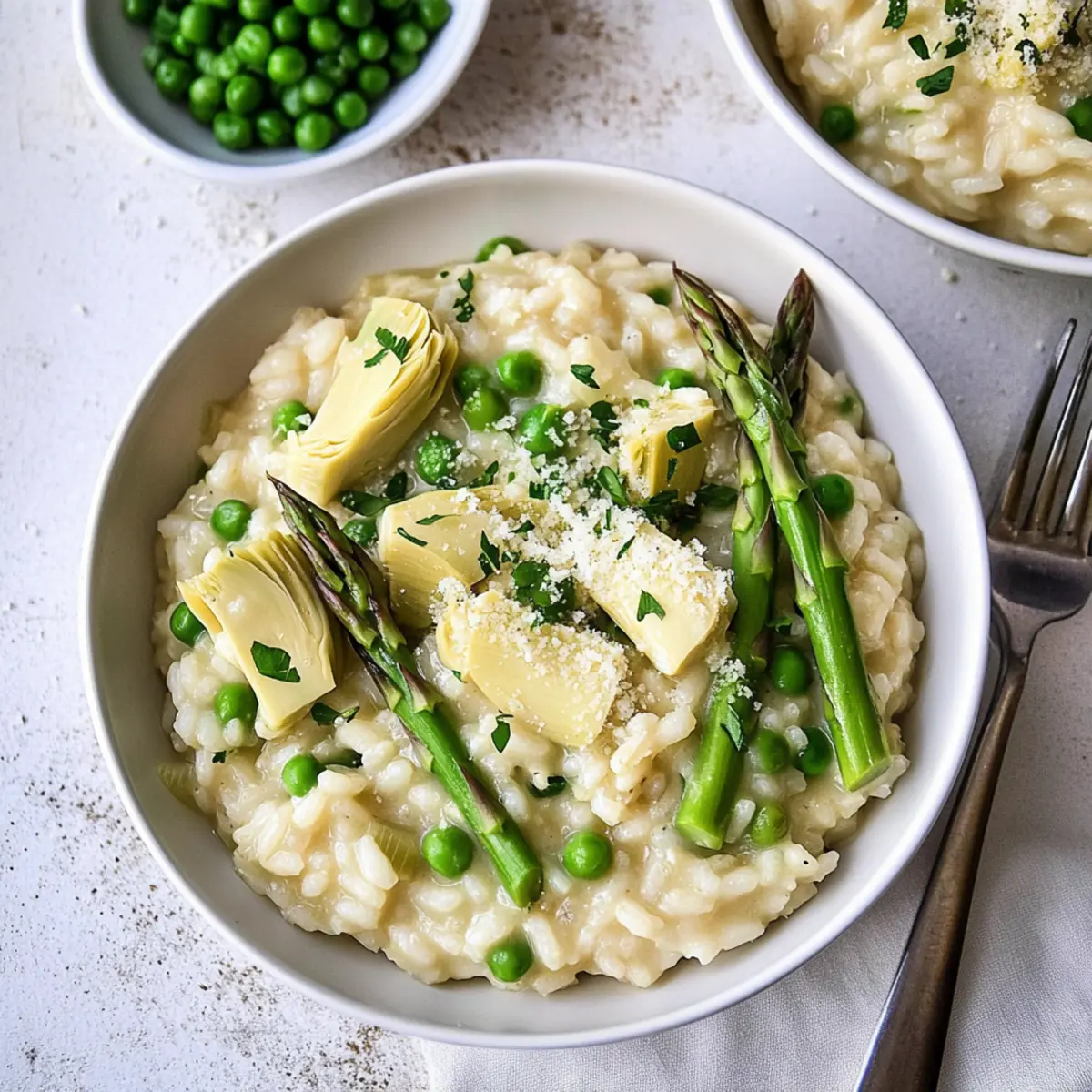
As I waited for spring to bloom, I couldn’t help but dream of a dish that truly captures the essence of the season. Enter my Oven-Baked Spring Vegetable Risotto. This recipe wraps a delightful medley of tender artichokes, vibrant asparagus, and sweet peas in a creamy embrace, spiced with refreshing lemon zest. Not only does this risotto offer a comforting richness, but it also embraces the hands-free cooking method of baking—perfect for those of us who favor simplicity over constant stirring. Plus, it’s a fantastic vegetarian option, ensuring your dining table celebrates the bounty of fresh produce. Curious about how to bring the brightness of spring into your kitchen? Let’s dive into the making of this scrumptious risotto!
Why Is This Risotto a Must-Try?
Hands-Free Cooking: Say goodbye to constant stirring! This oven-baked method lets you enjoy a hassle-free cooking experience.
Fresh and Flavorful: The vibrant mix of artichokes, asparagus, and peas bursts with the essence of spring, balanced beautifully with a hint of lemon zest.
Versatile and Customizable: Feel free to substitute with your favorite seasonal veggies or adjust the recipe for gluten-free options—it’s all about making it yours!
Creamy Indulgence: With rich mascarpone and Parmesan cheese, each spoonful delights with a creamy texture that’s comforting yet refreshing.
Family-Friendly Appeal: Perfect for home dinners or impressing guests, this risotto is sure to be a crowd-pleaser. Pair it with a light salad and you’ve got a winning meal!
Spring Vegetable Risotto Ingredients
• • Get ready to create a seasonal delight!
For the Risotto
- Vegetable or Chicken Broth – Provides the base flavor; choose low-sodium for a healthier option.
- Asparagus – Adds freshness and crunch; green beans make a great substitute.
- Olive Oil – Ideal for sautéing and adds richness; butter can be swapped for a creamier texture.
- Butter – Enhances flavor; can be replaced with more olive oil for a dairy-free option.
- Onion – Brings sweetness and depth; shallots are a milder alternative.
- Garlic – Adds aromatic flavor; fresh garlic is best, though garlic powder will do in a pinch.
- Arborio Rice – The starchy rice that creates creamy risotto; use Carnaroli rice for a gluten-free option.
- Dry White Wine – Introduces acidity and complexity; omit and increase lemon juice slightly for a non-alcoholic version.
- Lemon (zest and juice) – Provides brightness; lime can be used as an alternative.
- Mascarpone Cheese – Creates a luscious texture; cream cheese works if needed.
- Parmesan Cheese – Adds umami depth; nuts or nutritional yeast are great for a dairy-free option.
- Frozen Artichoke Hearts – Adds heartiness; fresh artichokes are a lovely choice if available.
- Frozen Green Peas – Brings a sweet pop of color; fresh peas can enhance flavor and texture.
- Fresh Parsley – Garnishes and brightens the dish; substitute with any fresh herb like basil or chives.
For Serving
- Additional Parmesan Cheese – Sprinkle on top for an extra cheesy touch; or use a dairy-free alternative for a lighter option.
- Fresh Herbs – A final touch of freshness; consider dill or mint to elevate flavors.
This Spring Vegetable Risotto not only celebrates spring’s fresh produce but also keeps your cooking experience enjoyable and serene!
Step‑by‑Step Instructions for Spring Vegetable Risotto
Step 1: Preheat the Oven
Preheat your oven to 350°F (175°C), ensuring it’s fully heated before baking your risotto. This temperature is ideal for gently cooking the rice and allowing the flavors to meld beautifully, creating a delightful Oven-Baked Spring Vegetable Risotto.
Step 2: Prepare the Asparagus
While the oven is heating, wash and cut your asparagus into bite-sized pieces, separating the tips. In a skillet, sauté the asparagus stalks in olive oil for about 1-2 minutes until they turn bright green, then remove them and set aside. This step adds a fresh crunch to your risotto.
Step 3: Warm the Broth
In a separate saucepan, gently warm your vegetable or chicken broth over medium heat until it’s steaming but not boiling, approximately 5-7 minutes. Keeping the broth warm is crucial to ensure that your Arborio rice cooks evenly when added to your Spring Vegetable Risotto.
Step 4: Sauté the Aromatics
In the same skillet, add a mix of olive oil and butter, then sauté the chopped onion over medium heat for about 3-4 minutes until it becomes translucent. Add minced garlic and cook for another 15 seconds, just until fragrant, elevating the base flavors of your risotto.
Step 5: Toast the Arborio Rice
Stir in the Arborio rice and toast it in the skillet for about 2-3 minutes, ensuring each grain is coated and appears mostly translucent. This technique releases the rice’s starch, which is key for achieving the creamy consistency you desire in your Spring Vegetable Risotto.
Step 6: Add the Wine and Broth
Pour in the dry white wine, allowing it to cook down for about 1-2 minutes until mostly evaporated. Then, add 4 cups of the warmed broth, along with the lemon juice and zest. Stir everything together, ensuring the rice is fully submerged in the liquid.
Step 7: Bake the Risotto
Transfer the mixture to an oven-safe dish, cover tightly with foil, and bake in your preheated oven for 20 minutes. The risotto should be just underdone at this stage, absorbing flavors while preventing the need for constant stirring, making this a stress-free step.
Step 8: Final Touches on the Stovetop
After baking, place the risotto back on the stovetop over low heat. Stir in the remaining broth gradually, along with the mascarpone and Parmesan cheese, which will help create a luxuriously creamy texture in your Spring Vegetable Risotto.
Step 9: Incorporate the Vegetables
Gently fold in the thawed artichoke hearts, frozen peas, and the cooked asparagus stalks. Finish by garnishing with the reserved asparagus tips and an extra sprinkle of Parmesan, adding a burst of color and flavor to this comforting dish.
Step 10: Serve Hot
Serve your Oven-Baked Spring Vegetable Risotto immediately, ensuring each portion is topped with a sprinkle of fresh parsley for brightness. This creamy dish not only delights the taste buds but also encapsulates the essence of fresh, spring flavors in every bite.
Make Ahead Options
These Oven-Baked Spring Vegetable Risotto is perfect for busy weeknights and meal prep enthusiasts! You can sauté the onions and garlic, toast the Arborio rice, and combine them with the wine and broth up to 24 hours in advance. Simply store this mixture in an airtight container in the refrigerator. When you’re ready to enjoy it, transfer it to an oven-safe dish, cover, and bake as directed. To keep the flavors fresh, add your asparagus and peas right before serving. This method not only saves you time but ensures that each bite remains just as delicious as when freshly made!
How to Store and Freeze Spring Vegetable Risotto
Fridge: Store leftover Spring Vegetable Risotto in an airtight container for up to 3 days. This will keep the flavors fresh while preventing any unnecessary moisture loss.
Freezer: For long-term storage, portion risotto into freezer-safe containers. It can be frozen for up to 2 months. Just remember to cool it completely before sealing!
Reheating: When ready to enjoy, reheat in the microwave or a saucepan on low heat. Add a splash of broth to revive its creamy texture, stirring frequently for even heating.
Thawing: If frozen, thaw overnight in the fridge before reheating. This ensures the best texture and flavor when you serve it up again.
Expert Tips for Spring Vegetable Risotto
- Use Fresh Ingredients: Fresh asparagus and thawed artichoke hearts ensure the best texture and flavor. Avoid frozen veggies if possible for a more vibrant dish.
- Measure Your Broth: Make sure to use the right amount of broth initially, but don’t hesitate to adjust if you desire a creamier finish—your Spring Vegetable Risotto may need more liquid!
- Perfect Your Oven Temperature: Keep the oven temperature steady at 350°F to avoid overcooking the rice or causing uneven textures in your risotto.
- Mind the Cheese: When adding mascarpone and Parmesan, mix gently to avoid clumping and achieve that smooth, creamy result you’re after.
- Flavorful Add-Ins: Don’t be afraid to experiment with seasonal vegetables or herbs, which can take this risotto from delightful to spectacular, enhancing the spring theme even more!
- Leftover Reheating: When reheating leftovers, add a splash of broth to restore moisture and ensure every bite of your Spring Vegetable Risotto remains creamy and delicious.
What to Serve with Oven-Baked Spring Vegetable Risotto?
Elevate your dinner experience with these delightful pairings that fill your table with vibrant flavors and textures.
- Garlic Bread: A classic choice that adds a crunchy, buttery element, perfect for mopping up creamy risotto.
- Mixed Green Salad: Fresh greens with a light vinaigrette bring a refreshing contrast to the rich risotto, balancing the meal beautifully.
- Roasted Vegetables: Caramelized veggies like bell peppers and zucchini complement the dish’s freshness while adding a hearty side.
- Grilled Lemon Chicken: Lightly seasoned succulent chicken enhances the meal and makes it family-friendly, ideal for a cozy dinner.
- Chilled White Wine: A crisp Sauvignon Blanc works marvelously with the lemony brightness of the risotto, enhancing the overall flavor.
- Strawberry Shortcake: End your meal on a sweet note with this light and fruity dessert, making it a seasonal celebration.
- Pesto Bruschetta: The bright, herbaceous notes of pesto on toasted bread offer a lively appetizer before diving into your creamy dish.
- Sparkling Water with Lime: A refreshing drink option that cleanses the palate, ensuring you savor every bite of your delightful risotto.
Spring Vegetable Risotto Variations
Feel free to embrace your creativity with this risotto recipe and transform it according to your tastes and dietary needs!
-
Quinoa Alternative: Swap arborio rice for quinoa for a nuttier flavor and added protein. This lightens up the dish perfectly!
-
Farro Option: Substitute arborio rice with farro for a chewy texture that complements the creamy elements. It’s a hearty twist that adds fiber and nutrients.
-
Mushroom Broth: Upgrade the flavor profile by using mushroom broth instead of vegetable or chicken broth for a deeper, earthier taste. It’s a delightful way to enrich the dish!
-
Vegetable Variations: Use a mix of seasonal vegetables like zucchini or bell peppers. They’ll add a pop of color and freshness, making the risotto truly your own.
-
Dairy-Free Delight: Replace mascarpone and Parmesan with cashew cream and nutritional yeast to create a vegan version. It offers a creamy and cheesy taste without dairy!
-
Heat It Up: For those who love a kick, toss in a pinch of red pepper flakes or a dash of cayenne to the risotto as it cooks, giving you a warm and satisfying heat.
-
Herbal Infusion: Fresh dill or mint can replace parsley for a new flavor dimension. They add a refreshing herbal note that brightens each bite.
-
Lemon Zing: Add extra lemon zest and juice not only for brightness but also to enhance the fresh flavors in the risotto. Just the right touch to bring spring to your plate!
As you explore these variations, let your taste buds guide you. This Vegetarian Pasta or a light Mediterranean Salad could be delightful accompaniments to your creamy creation!
Spring Vegetable Risotto Recipe FAQs
How do I choose the right asparagus for my risotto?
Absolutely! Look for bright green asparagus with firm stalks and tightly closed tips. Avoid any that have dark spots or are limp, as this indicates they’re past their prime. Fresh asparagus will bring a delightful crunch and vibrant color to your Spring Vegetable Risotto.
How should I store leftovers of Spring Vegetable Risotto?
To maintain its creamy goodness, place leftover Spring Vegetable Risotto in an airtight container and store it in the fridge for up to 3 days. Ensure it’s cooled completely before sealing. When ready to eat, simply reheat gently on the stovetop or in the microwave, adding a splash of broth if necessary to restore its creamy texture.
Can I freeze Spring Vegetable Risotto?
Yes, you can! Portion your risotto into freezer-safe containers after it has completely cooled. It will stay fresh in the freezer for up to 2 months. When you’re ready to enjoy it, just thaw it overnight in the fridge before reheating. This method helps to maintain the best flavor and texture.
What if my risotto turns out too thick?
Very common! If your risotto becomes too thick after cooking, do not fret. Simply add a bit more warm broth or water gradually while stirring on low heat. This will loosen it up, allowing you to achieve the desired creamy consistency. Remember, risotto is all about the gentle touch!
Is this Spring Vegetable Risotto suitable for gluten-free diets?
Absolutely! To make a gluten-free version of this dish, all you need to do is substitute Arborio rice with Carnaroli rice, which is also starchy and yields a wonderfully creamy risotto. Additionally, check that your broth is gluten-free to ensure the entire dish meets dietary needs.
Can pets enjoy any of the ingredients in this recipe?
While some ingredients like peas and asparagus are safe for dogs in moderation, it’s best to keep your furry friends away from garlic and onion, as they can be harmful to pets. Always check with your vet if you’re unsure about introducing new foods to your pet’s diet.
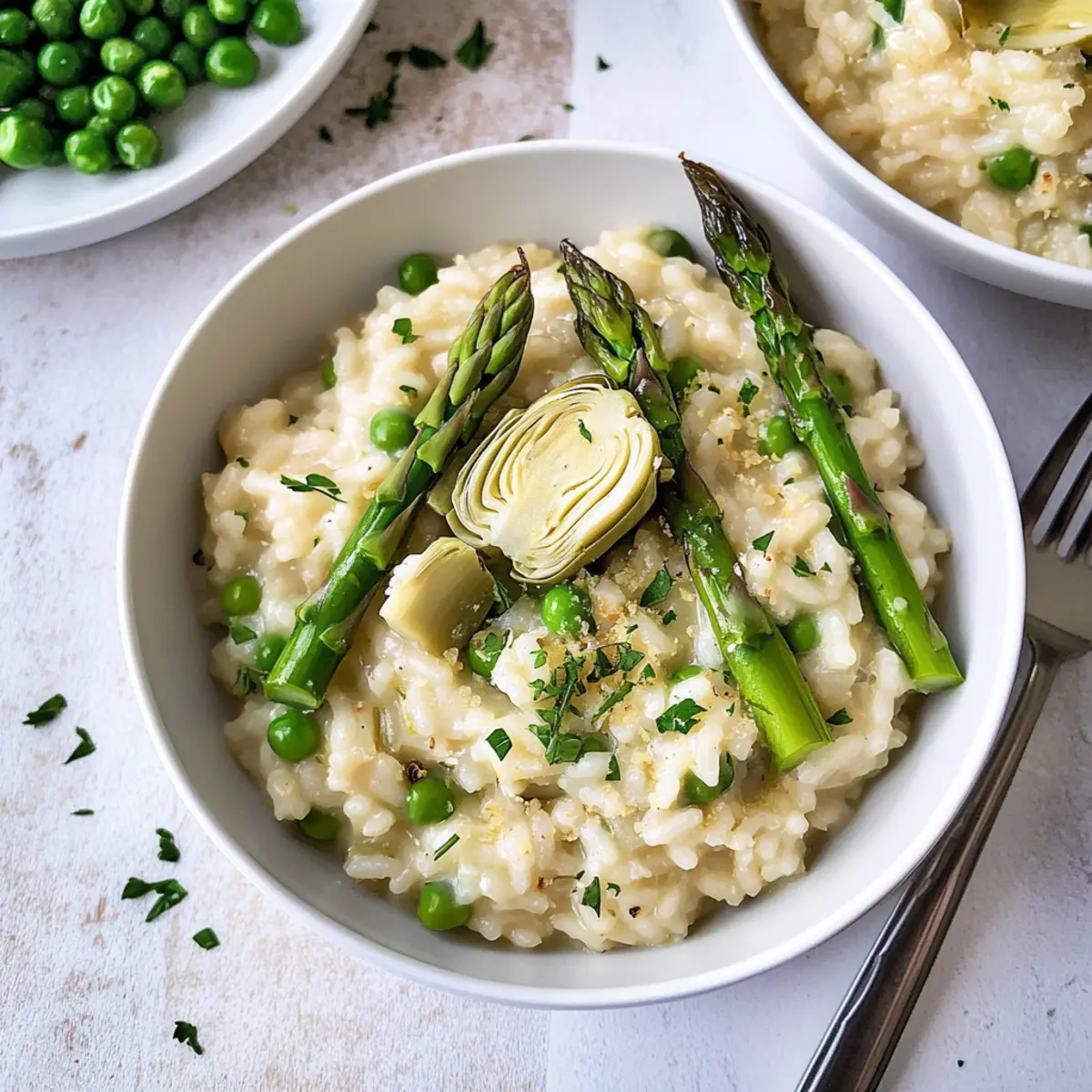
Creamy Spring Vegetable Risotto for Effortless Comfort
Ingredients
Equipment
Method
- Preheat your oven to 350°F (175°C).
- Wash and cut the asparagus into bite-sized pieces, sauté in olive oil for 1-2 minutes, and set aside.
- Warm the broth in a saucepan over medium heat until steaming, about 5-7 minutes.
- Sauté the chopped onion in a mix of olive oil and butter for 3-4 minutes until translucent, then add garlic for 15 seconds.
- Toast the Arborio rice in the skillet for 2-3 minutes until mostly translucent.
- Add the dry white wine and let it cook down for 1-2 minutes, then add 4 cups of broth, lemon juice, and zest.
- Transfer the mixture to an oven-safe dish, cover with foil, and bake for 20 minutes.
- Stir in the remaining broth, mascarpone, and Parmesan cheese back on low heat for a creamy texture.
- Fold in the artichoke hearts, peas, and cooked asparagus stalks. Garnish with asparagus tips and an extra sprinkle of Parmesan.
- Serve immediately with fresh parsley on top.
Leave a Reply