
As I tossed the vibrant medley of ingredients into my skillet, the enticing aroma wafted through my kitchen and instantly transported me to sun-kissed Mediterranean shores. This Fresh and Zesty Greek Pasta with Feta and Olives is not just a meal; it’s a celebration of flavor that brings together creamy feta, briny Kalamata olives, and juicy cherry tomatoes in one satisfying dish. Whether you’re rushing home from work or enjoying a relaxed weekend afternoon, this recipe makes dinner a breeze with its quick prep time and customizable options—perfect for any dietary preference. You’ll find yourself delighting in this vegetarian treasure that pairs well with almost anything. Curious to uncover how easy it is to whip up this delightful Greek-inspired dish? Let’s dive in!
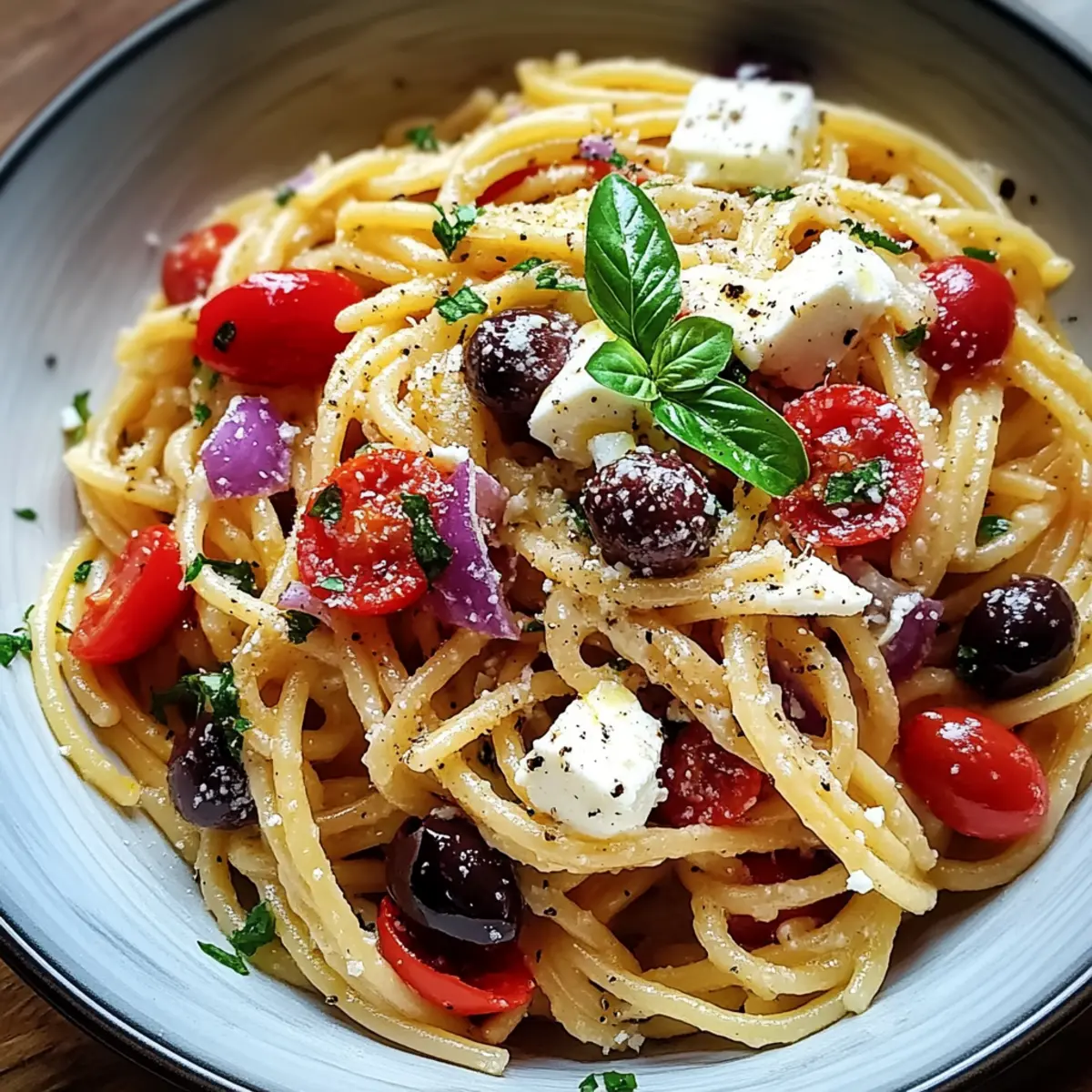
Why is Greek Pasta a Must-Try?
Simplicity at Its Best: This dish is quick to prepare, taking just 40 minutes from start to finish.
Bursting with Flavor: The combination of tangy feta, briny olives, and fresh herbs creates a vibrant Mediterranean experience in every bite.
Customizable Delight: Whether opting for gluten-free pasta or adding proteins like grilled chicken or chickpeas, you can make this suit your taste and dietary needs.
Perfect Weeknight Meal: Ideal for busy evenings, this recipe requires minimal prep and is sure to please everyone at the table.
Crowd-Pleasing Comfort: Bring it to gatherings or serve it solo; this dish draws in friends and family with its inviting aroma and beautiful colors.
Pair it with a fresh side like a Chickpea Lentil Salad for a complete Mediterranean feast!
Greek Pasta with Feta and Olives Ingredients
• Discover the vibrant components that make this dish a Mediterranean masterpiece!
For the Pasta
- Spaghetti – This is the base for the dish, but feel free to substitute with whole grain or gluten-free pasta for a healthier option.
For the Sauce
- Extra Virgin Olive Oil – Adds rich flavor to the dish; always choose high-quality for the best taste while sautéing the vegetables.
- Garlic – Provides aromatic depth; sauté briefly to avoid burning and losing flavor.
- Red Onion – Contributes sweetness when sautéed; yellow onion can be used as an alternative if needed.
- Red Bell Pepper – Adds both crunch and color to the mix; you can swap it for green bell pepper if you prefer less sweetness.
- Cherry Tomatoes – Bursting with juices; halved grape tomatoes work as a great substitute if necessary.
- Kalamata Olives – Offers a briny flavor; green or black olives can be used to tweak the taste.
- Dried Oregano – A classic Mediterranean herb that lends earthy notes to the dish; fresh oregano can easily take its place.
- Red Pepper Flakes – Adds a pleasant heat; omit them if you’re aiming for a milder dish.
For the Finishing Touches
- Feta Cheese – Creamy and tangy, it melts beautifully into the pasta; goat cheese can serve as a wonderful alternative if desired.
- Fresh Basil & Parsley – Brightens up the dish with freshness; feel free to mix and match with other herbs like dill or cilantro for variety.
- Lemon Juice – Enhances the dish with its acidity; lime juice could be an effective substitute for a twist.
Step‑by‑Step Instructions for Greek Pasta with Feta and Olives
Step 1: Boil the Pasta
Begin by bringing a large pot of salted water to a rolling boil. Add the spaghetti and cook it until al dente, typically around 8-10 minutes, stirring occasionally to prevent sticking. Just before draining, reserve ½ cup of the starchy pasta cooking water; this will help create a silky sauce later. Drain the pasta and set it aside.
Step 2: Sauté the Garlic
In a large skillet, heat 2 tablespoons of extra virgin olive oil over medium heat until shimmering. Add the minced garlic and sauté it for about 1 minute, or until fragrant, ensuring it doesn’t burn. This is the base for your Greek Pasta with Feta and Olives, providing aromatic depth that elevates the dish.
Step 3: Cook the Vegetables
Next, stir in the sliced red onion and red bell pepper. Cook these for about 5 minutes, stirring occasionally, until they become tender and slightly caramelized. The vegetables should be vibrant and softened, infusing the dish with sweetness and crunch that beautifully complements the feta and olives.
Step 4: Add Tomatoes and Olives
Now, throw in the halved cherry tomatoes and Kalamata olives along with the dried oregano and red pepper flakes. Stir the mixture well and cook for an additional 3-4 minutes, allowing the tomatoes to soften and release their juices, creating a light, flavorful sauce that’ll envelop the pasta.
Step 5: Season the Mixture
Taste the vegetable mixture and season with salt and pepper according to your preference. Remember that both the olives and feta cheese carry their own saltiness, so adjust gently. This step is crucial for ensuring that every bite of your Greek Pasta with Feta and Olives is perfectly seasoned.
Step 6: Combine Pasta with Sauce
Once seasoned, add the drained spaghetti to the skillet with the vegetable mixture. Toss everything together thoroughly, adding some reserved pasta water gradually until the desired sauciness is achieved. The pasta should be coated with the vibrant vegetable mixture, creating a hearty and satisfying dish.
Step 7: Fold in Cheese and Herbs
Remove the skillet from heat and gently fold in the crumbled feta cheese, fresh basil, and parsley. The residual heat will slightly melt the feta, blending its creamy texture with the other ingredients. This is when the Greek Pasta with Feta and Olives truly comes together, bursting with flavor and freshness.
Step 8: Finish with Lemon Juice
Squeeze a generous splash of fresh lemon juice over the pasta and toss to combine. This final touch enhances the dish with a bright, zesty flavor that balances the richness of the feta and olives. Make sure every forkful is infused with this Mediterranean goodness.
Step 9: Serve and Enjoy
Serve the Greek Pasta warm, garnished with extra herbs or a sprinkle of feta if desired. The inviting aroma and vibrant colors make it a perfect centerpiece for dinner, appealing to both the eyes and palate. This delightful dish is sure to impress anyone at your table.
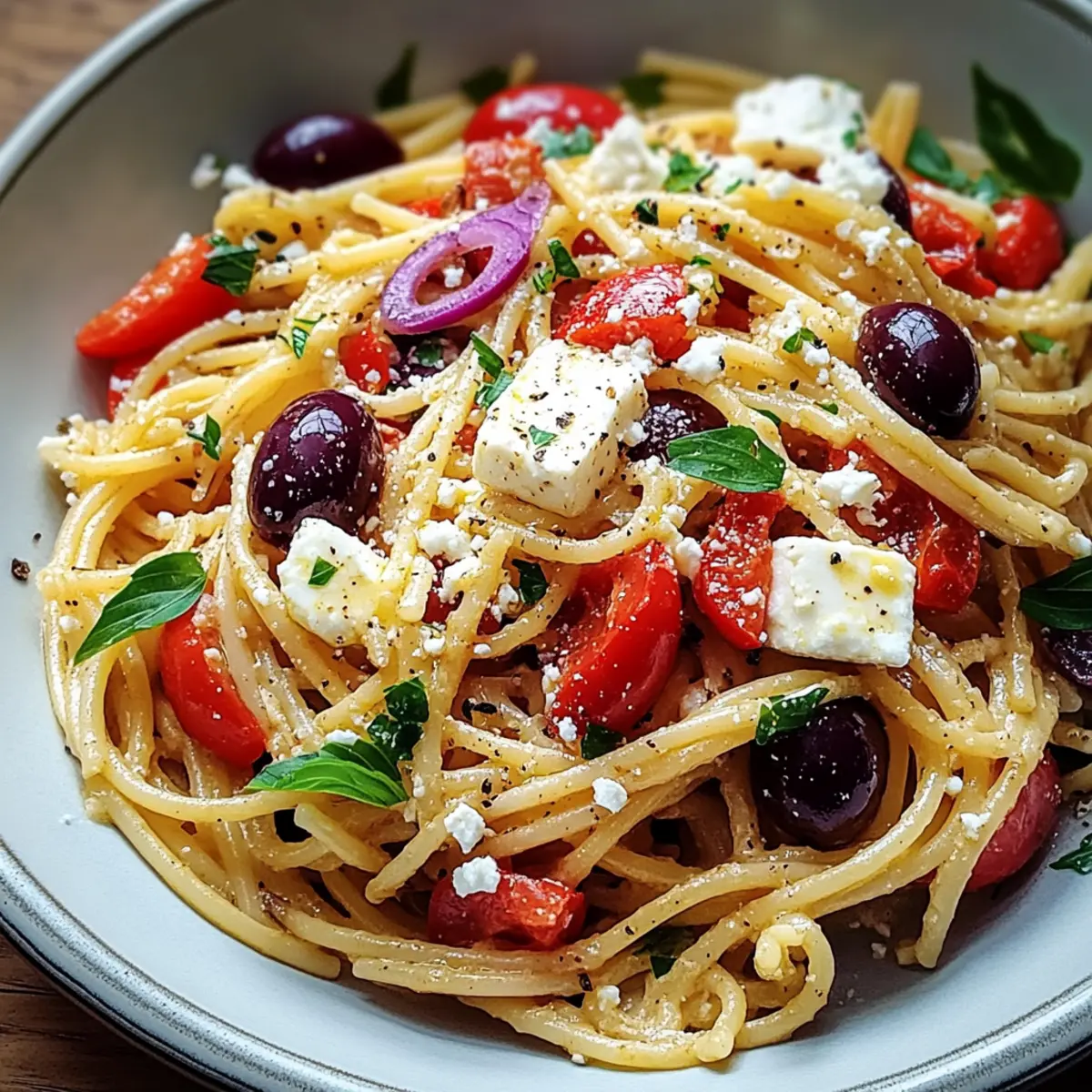
What to Serve with Greek Pasta with Feta and Olives
Elevate your meal by pairing this vibrant pasta dish with delightful sides and beverages that enhance its Mediterranean charm.
-
Crispy Garlic Bread: The warm, buttery crunch complements the creamy feta beautifully, making each bite a harmonious experience.
-
Mediterranean Chickpea Salad: This colorful salad adds freshness and protein, balancing the dish’s flavors while providing a satisfying crunch.
-
Roasted Vegetable Medley: A mix of seasonal veggies roasted to perfection brings additional layers of flavor, making it a delightful side. Each bite melds beautifully with the pasta.
-
Greek Tzatziki Dip: Serve with warm pita chips for a refreshing dip that pairs perfectly with the pasta’s flavors, offering a cool contrast to the warm meal.
-
Fresh Green Salad: Toss together arugula, cucumbers, and a light vinaigrette for a crisp, refreshing side that cuts through the richness of the feta.
-
Red Wine: A chilled glass of Greek red wine like Agiorgitiko enhances the Mediterranean experience, elevating the meal with its fruity notes.
-
Dessert: End the meal with a light, tangy lemon sorbet. Its refreshing flavor is the perfect way to cleanse the palate after a savory feast.
Storage Tips for Greek Pasta with Feta and Olives
Fridge: Store leftovers in a sealed container for up to 3 days. When reheating, add a splash of olive oil to restore moisture and taste.
Freezer: For longer storage, freeze the pasta without fresh herbs and lemon juice. It can last in the freezer for up to 3 months; just thaw overnight in the fridge before reheating.
Airtight Containers: To maintain freshness, use airtight containers to avoid moisture and freezer burn for your Greek Pasta with Feta and Olives.
Vegetable Storage: If you’re preparing the ingredients in advance, chop and store vegetables and herbs separately to keep them fresh longer.
Make Ahead Options
These Greek Pasta with Feta and Olives are perfect for meal prep enthusiasts busy with life! You can chop and refrigerate the vegetables (like the red onion, bell pepper, and cherry tomatoes) up to 3 days ahead, keeping them in airtight containers to maintain freshness. Additionally, crumbled feta can be stored separately in the fridge for the same period. If you prefer, cook the pasta and toss it with a little olive oil to prevent sticking; this can be done up to 24 hours in advance. When you’re ready to serve, simply sauté the prepared vegetables, add the cooked pasta, and fold in the feta and herbs. In no time, you’ll enjoy a satisfying meal, just as delicious as when freshly made!
Expert Tips for Greek Pasta with Feta and Olives
-
Taste as You Go: Always sample your dish while cooking to ensure it’s seasoned perfectly. With salty ingredients like feta and olives, adjusting at the end is crucial.
-
Moisture Matters: If the pasta seems dry, gradually stir in the reserved cooking water until you reach your desired consistency. This will help create a silky sauce for your Greek Pasta with Feta and Olives.
-
Watch the Garlic: Sauté garlic until fragrant but not browned, as burnt garlic can add an unwelcome bitterness to your dish.
-
Customize Your Olives: Experiment with different olives. While Kalamata offers a classic taste, trying green or black olives can give your dish a fresh twist.
-
Add Freshness Last: Fold in herbs and feta at the end to preserve their vibrant flavors. Fresh herbs bring brightness that perfectly balances the tangy and savory elements.
Greek Pasta with Feta and Olives Variations
Feel free to embrace your culinary creativity with this recipe and make it your own!
-
Gluten-Free: Substitute spaghetti with gluten-free pasta like brown rice or chickpea noodles for a delightful twist.
-
Protein Boost: Incorporate grilled chicken, shrimp, or chickpeas to transform this dish into a heartier meal; they pair beautifully with the Mediterranean flavors.
-
Herb Exchange: Try mixing fresh dill or cilantro alongside basil and parsley; each herb brings a unique fragrance to the dish.
-
Spicy Kick: Add more red pepper flakes or toss in fresh chopped chili for an extra layer of heat, bringing your pasta to life.
-
Veggie Variations: Swap in seasonal vegetables like zucchini or asparagus; these options add freshness and a pop of color to your bowl.
-
Creamy Twist: Replace feta with goat cheese or add a dollop of Greek yogurt for a smooth, creamy texture that complements the dish nicely.
-
Smoky Flavor: Incorporate smoked paprika to introduce a warm, smoky element that enhances the Mediterranean essence.
Pair this vibrant pasta with a side of Roasted Carrots with Whipped Ricotta and Hot Honey for a complete meal that will always feel special!
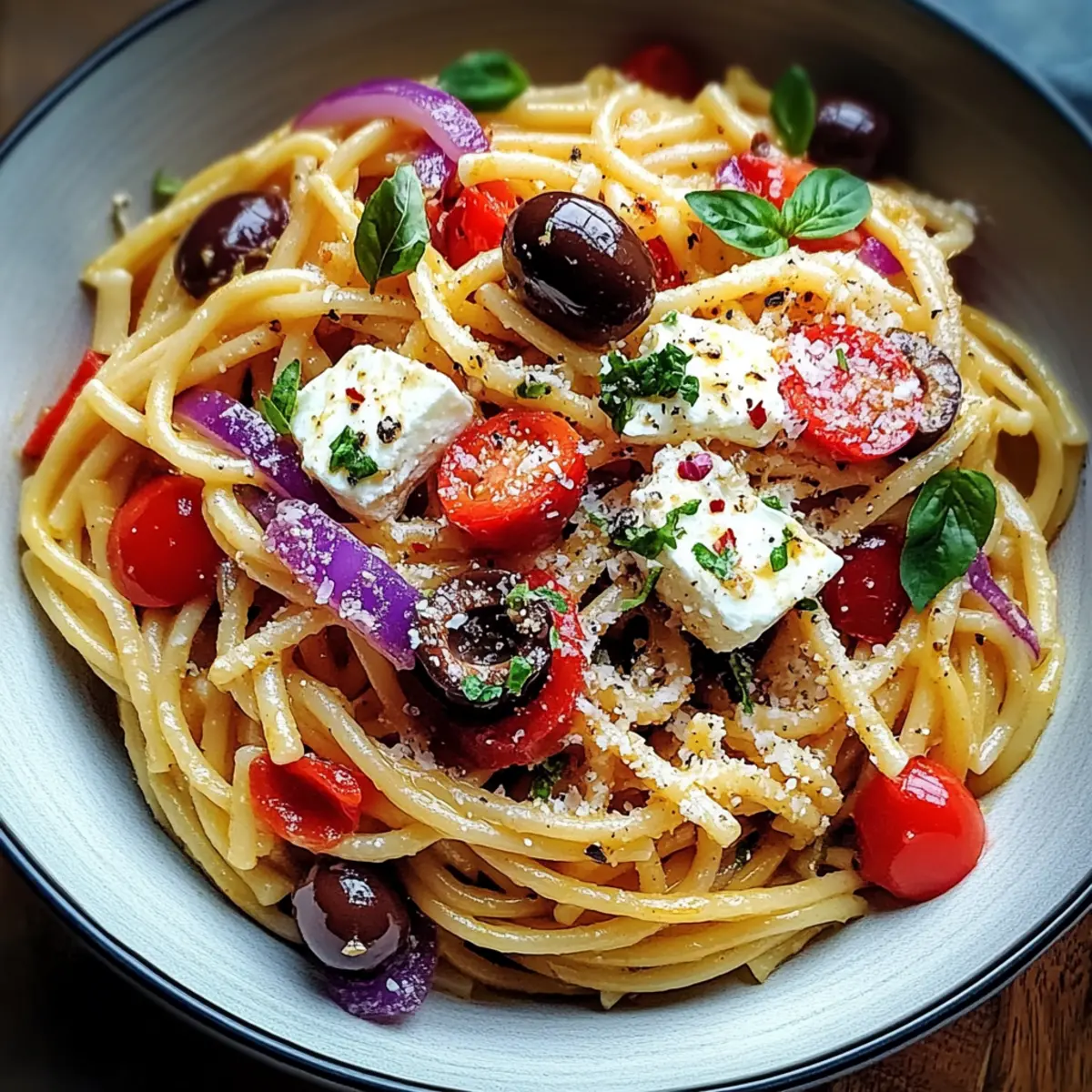
Greek Pasta with Feta and Olives Recipe FAQs
How should I pick ripe cherry tomatoes?
Absolutely! When choosing cherry tomatoes, look for ones that are plump, smooth, and free of blemishes or dark spots all over. A vibrant red color indicates ripeness and sweetness. If they’re too firm, they may not be fully ripe, whereas overly soft tomatoes might be past their prime.
What’s the best way to store leftovers of Greek Pasta with Feta and Olives?
For optimal freshness, store your leftovers in an airtight container in the fridge for up to 3 days. To avoid drying out when reheating, add a splash of olive oil to keep the pasta moist and flavorful. If you plan to eat it later, separate chopped herbs and ingredients for better flavor retention.
Can I freeze Greek Pasta with Feta and Olives?
Yes, indeed! To freeze, place the pasta in a freezer-safe container but be sure to leave out the fresh herbs and lemon juice. This dish can last in the freezer for up to 3 months. When you’re ready to enjoy it, thaw overnight in the fridge, then gently reheat on the stovetop with a bit of olive oil until warmed through.
What if I don’t like olives or have allergies?
Not a problem at all! While Kalamata olives add a wonderful briny flavor, you can simply omit them and replace them with additional cherry tomatoes or a splash of capers for a different taste. If you have allergies, always check the labels for feta and any other ingredients. Goat cheese can be a suitable alternative if dairy is a concern, but always confirm it aligns with your dietary needs.
How do I prevent the pasta from becoming too dry?
Very good question! If you notice your Greek Pasta with Feta and Olives looks dry, gradually add the reserved cooking water as you stir until you achieve the desired consistency. This starchy water helps create a silkier sauce that coats the pasta beautifully. Always taste as you go for perfect seasoning and texture!
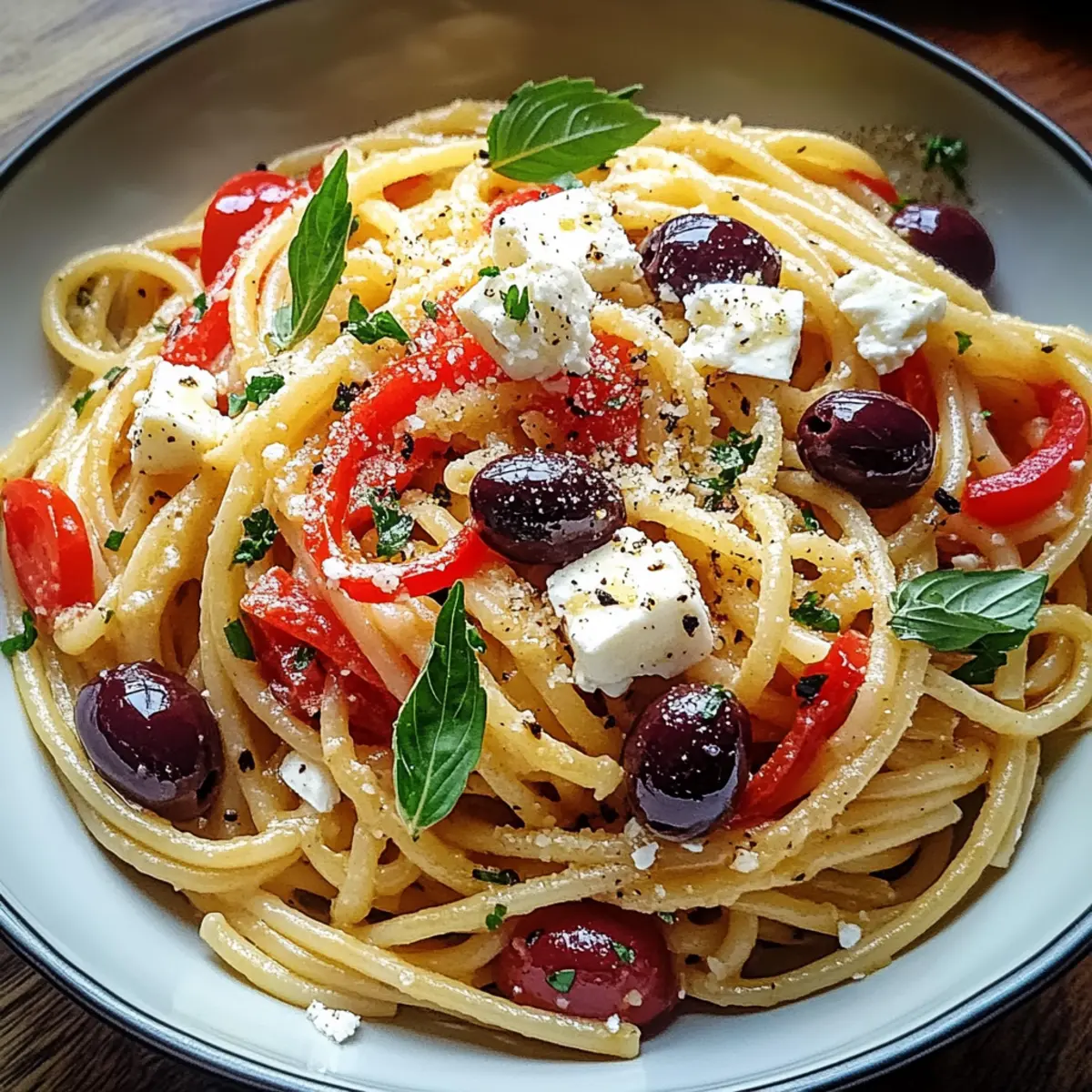
Zesty Greek Pasta with Feta and Olives for a Flavor Boost
Ingredients
Equipment
Method
- Boil the Pasta: Bring a large pot of salted water to a rolling boil. Add the spaghetti and cook until al dente, around 8-10 minutes. Reserve ½ cup of cooking water before draining.
- Sauté the Garlic: Heat olive oil in a skillet, add minced garlic, and sauté for about 1 minute until fragrant.
- Cook the Vegetables: Stir in red onion and bell pepper; cook for 5 minutes until tender and slightly caramelized.
- Add Tomatoes and Olives: Mix in cherry tomatoes and olives with oregano and red pepper flakes; cook for an additional 3-4 minutes.
- Season the Mixture: Adjust seasoning with salt and pepper according to taste.
- Combine Pasta with Sauce: Add drained spaghetti to the skillet, toss with reserved pasta water to achieve desired sauciness.
- Fold in Cheese and Herbs: Remove from heat and mix in feta, basil, and parsley.
- Finish with Lemon Juice: Squeeze lemon juice over the pasta and toss to combine.
- Serve and Enjoy: Serve warm, garnished with extra herbs or feta.
Leave a Reply